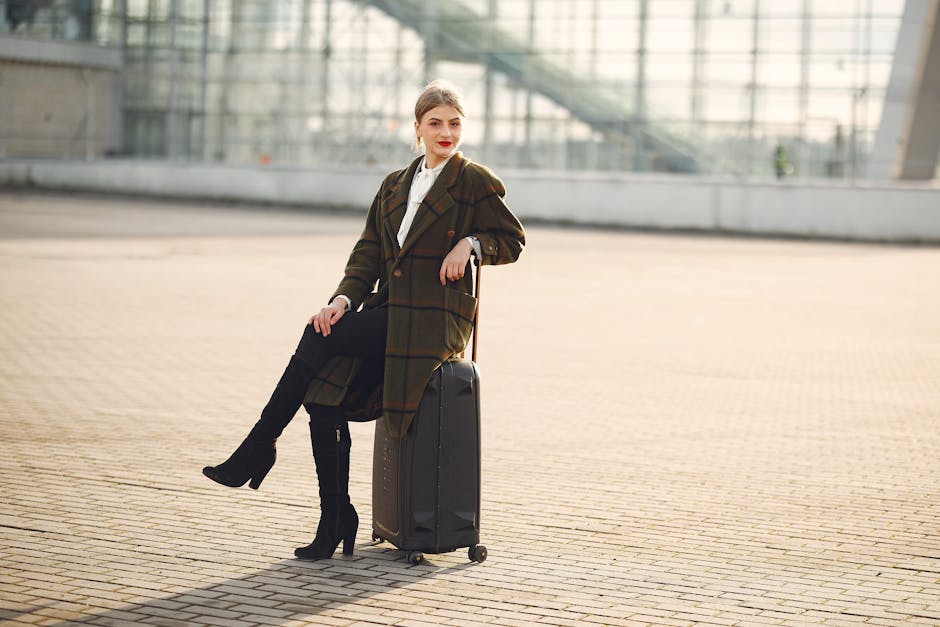
A traveler arrives at Haneda after a 14-hour flight from New York, carry-on in tow, and heads to the domestic terminal for the short hop to Osaka. Same bag that flew from London to Berlin to Barcelona without a second glance. Peach Aviation’s gate agent asks her to place it on the scale. It weighs 9.2kg. Their limit is 7kg. She pays a ¥3,000 checked bag fee on a ticket that cost her ¥4,500.
This is not an edge case. It’s a routine surprise for travelers who assume Japan’s domestic carriers mirror the international airline that delivered them to the country. They don’t — and the gap matters more than most realize until they’re standing at the gate.
Japan Airline Carry-On Limits: International vs. Domestic vs. Budget
Size limits are mostly consistent across Japanese carriers. Weight limits are not. That’s where the real variation lives — and where travelers get caught off guard most often.
| Airline | Service Type | Max Size (cm) | Max Weight | Personal Item Included in Weight? |
|---|---|---|---|---|
| ANA | Full-service, intl + domestic | 55 × 40 × 25 | 10 kg | No — separate allowance |
| JAL | Full-service, intl + domestic | 55 × 40 × 25 | 10 kg | No — separate allowance |
| Peach Aviation | Budget, domestic + Asia | 55 × 40 × 25 | 7 kg total | Yes — everything combined |
| Jetstar Japan | Budget, domestic | 56 × 36 × 23 | 7 kg total | Yes — everything combined |
| Spring Japan | Budget, domestic | 55 × 40 × 25 | 7 kg total | Yes — everything combined |
| Delta / United (US-Japan) | International | 56 × 35 × 23 | No weight limit | No — separate allowance |
What “Total” Weight Actually Means on Budget Carriers
On Peach, Jetstar Japan, and Spring Japan, your carry-on and personal item are weighed together as a single allowance. A typical 22-inch hard-shell roller weighs 3.5–4.5kg empty. Add a laptop bag with a computer and charger — another 2–3kg — and you’re at 5.5–7.5kg before a single item of clothing enters the bag. Seven kilograms is a hard ceiling that leaves almost no room for error when your empty bags are already that heavy.
Jetstar Japan’s Depth Limit Is the Outlier Worth Watching
Most Japanese carriers cap carry-on depth at 25cm. Jetstar Japan caps it at 23cm. The Away The Carry-On measures 9.6 inches deep (24.4cm), which technically passes, but wheel housings and handles push the real-world measurement over. Enforcement varies by flight and gate agent, but on a fully booked domestic route, there’s no guarantee your bag clears visual inspection. If Jetstar Japan is on your itinerary, a soft-sided bag with no structural frame is the safer choice.
The Single Rule Worth Committing to Memory
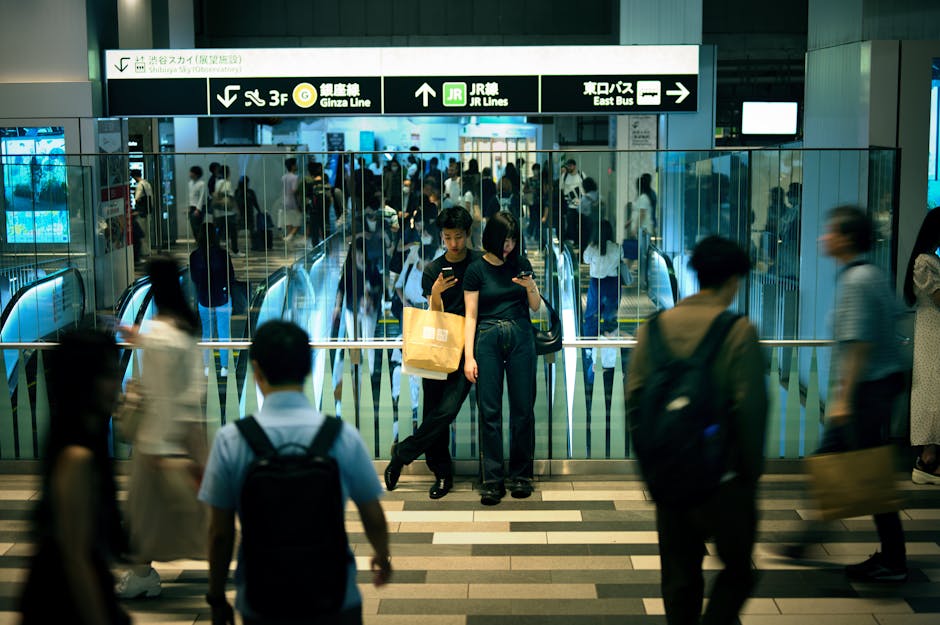
Find the strictest weight limit on any flight in your Japan itinerary — and pack for that number from the start.
If Peach is anywhere in your routing, you have a 7kg combined carry-on allowance, even if your long-haul international flight had no weight limit at all. Most travelers learn this at the gate rather than at home. The gate is the expensive place to learn it.
Carry-On Bags That Actually Work for Japan Travel
The Japan carry-on problem is three-dimensional: the bag must clear airline size limits, stay under the weight cap when packed, and be physically manageable on Tokyo’s packed metro system. That third factor quietly eliminates a lot of otherwise solid luggage.
Away The Carry-On — Best All-Around for Japan
Dimensions: 21.7″ × 13.7″ × 9″ (55.1 × 34.8 × 22.9cm). Empty weight: 7.3 lbs (3.3kg). Price: $295.
This is the clearest single recommendation for most Japan itineraries. At 3.3kg empty, you have 3.7kg of packing headroom on a Peach flight — tight, but workable for 7–10 days with disciplined packing. The polycarbonate shell handles Japan’s unpredictable rain without the fabric absorption problems of soft-sided bags. It clears size limits on every major Japanese carrier. The only real trade-off: hard shells are harder to compress into narrow ryokan closets and bullet train overhead racks than fabric bags. If that’s a concern, the Osprey below is the better call.
Osprey Farpoint 40 — Best for Multi-City Itineraries
Dimensions: 21″ × 13″ × 9″ (53.3 × 33 × 22.9cm). Empty weight: 3.1 lbs (1.4kg). Price: $190.
The Farpoint 40 is the correct choice when you’re changing cities every 2–3 days. At 1.4kg empty, you have 5.6kg of packing room within the 7kg budget carrier limit — more than any comparably sized roller. Backpacks sit against your body on crowded metro platforms, which is significantly easier to manage than a spinner during the Shibuya station morning rush. The hip belt stows completely when not needed. No wheels, which is actually an advantage on Tokyo’s stair-heavy subway entrances rather than a disadvantage.
Rimowa Essential Cabin — For Travelers Who Already Own One
Dimensions: 21.7″ × 15.8″ × 9.1″ (55 × 40 × 23cm). Empty weight: 6.4 lbs (2.9kg). Price: $700+.
The Rimowa fits all Japanese carrier size limits and leaves 4.1kg of packing room on budget flights. It’s a well-built bag. But at $700+ for a carry-on, the value case for buying it specifically for Japan doesn’t hold up against the Osprey or Away. Worth using if you already own one; not worth buying for this trip.
Nomatic Carry-On Pro — Best for Japan Business Travel
Dimensions: 22″ × 14″ × 9″ (55.9 × 35.6 × 22.9cm). Empty weight: 7.5 lbs (3.4kg). Price: $400.
The Nomatic’s organizational layout — built-in packing cubes, dedicated laptop sleeve, clamshell opening — works well for business travelers flying ANA or JAL on a 10kg allowance. At 3.4kg empty, though, you have only 3.6kg of packing room on a budget domestic leg, which barely covers a week of minimal clothing. Best for city-based business trips with no Peach or Jetstar Japan segments involved.
How Japan’s Train System Reshapes the Luggage Decision
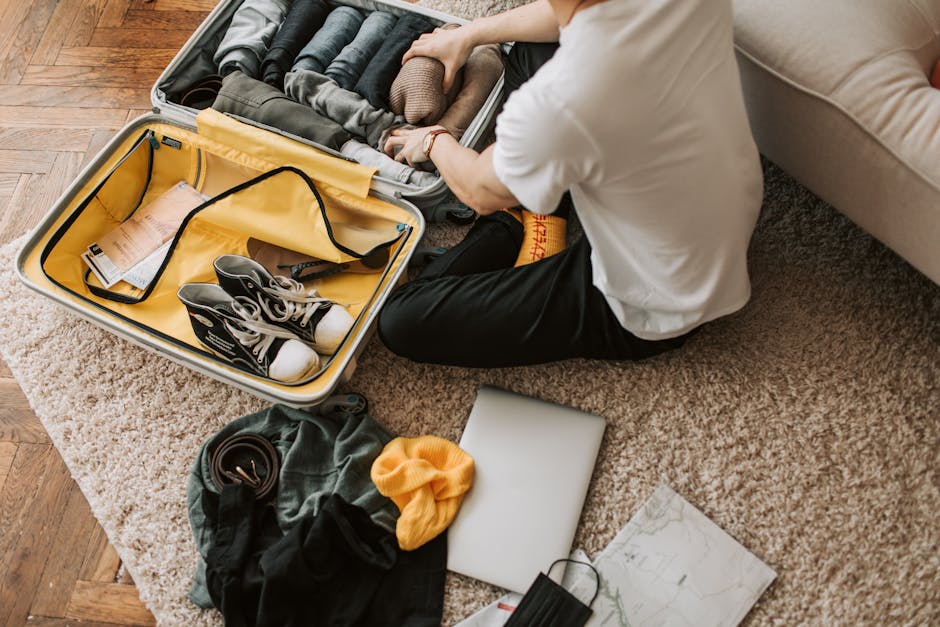
Most travel destinations don’t require you to think about how your bag performs on a subway at 8am. Japan does. The carry-on versus checked bag question here is as much about 48 hours of metro rides and bullet trains as it is about airline policy.
Tokyo Metro at Rush Hour Is a Different Environment
Tokyo’s metro carries 8–9 million passengers daily. Urban metro cars have no luggage racks. A 22-inch roller during the Yamanote Line morning rush is not just inconvenient for you — it actively blocks other passengers and runs counter to the social norms Japanese commuters follow around shared space. A 40L backpack fits against your body, leaves both hands free for overhead rails, and exits the train without maneuvering. Hard-shell rollers are manageable on off-peak trains between major Shinkansen cities. On daily urban transit, backpacks consistently perform better.
Shinkansen Overhead Racks and Reserved Luggage Space
Japan’s bullet trains added dedicated oversized luggage storage at the rear of each car with the N700S series introduced in 2026–2026. To use this space, you reserve it at the time of seat booking — it’s not available on a walk-up basis. Without the reservation, your bag goes into the overhead rack, which fits luggage up to roughly 25cm in depth. Most standard carry-ons clear that measurement, but it’s a snug fit for bags over 22 inches in length. Book the rear-car luggage space when you reserve Shinkansen seats if you’re traveling with a full-sized carry-on.
Takkyubin: The Service That Changes the Whole Equation
Yamato Transport’s takkyubin luggage forwarding service ships bags hotel-to-hotel across Japan for roughly ¥1,500–2,000 ($10–13) per bag. Drop your luggage at the hotel front desk before noon, fill out a small form, and it arrives at your next destination the following afternoon.
Many experienced Japan travelers structure their trip around this service deliberately: check one large bag on the international flight, use takkyubin to move it city-to-city within Japan, and carry only a daypack for daily sightseeing. The main bag spends the trip in Yamato’s trucks rather than your hands or train overhead racks. It’s not a workaround for overpacking — it’s a legitimate travel strategy that significantly reduces the physical effort of moving between Tokyo, Kyoto, and Osaka.
What Japan’s Convenience Store Culture Does to Your Packing List
Japan has approximately 55,000 convenience stores operating 24 hours a day. They sell toiletries, cold medicine, phone chargers, umbrellas, socks, contact lens solution, and surprisingly decent food at virtually every train station in the country.
The practical implication for carry-on packing: stop packing insurance items. Forgot shampoo? Matsumoto Kiyoshi pharmacy — a major Japanese drugstore chain with locations in every city and many train stations — sells a 200ml bottle for around ¥280. Need an umbrella because it started raining mid-day in Kyoto? Any konbini has one for ¥500. Left your plug adapter at home? Yodobashi Camera and Bic Camera, both enormous electronics retailers with flagship stores in every major Japanese city, stock every adapter type you could need.
Japan is the easiest major travel destination in the world to underpack for. The 7kg carry-on limit that sounds severe on paper is genuinely achievable for 7–10 day trips once you stop packing for scenarios that a ¥300 purchase resolves. Pack core clothing, one pair of good walking shoes, your electronics, and a light layer. Let Japan handle the rest.
When Carry-On Only Is the Wrong Call for Japan
Carry-on only travel works for Japan under specific conditions. Outside those conditions, checking a bag is the more practical decision.
- Winter travel to northern Japan: A heavy down parka, thermal base layers, and waterproof boots for Hokkaido or the Japanese Alps in January cannot fit within 7kg. This is not a packing puzzle with a clever solution. Check the bag.
- Trips over 14 days: The minimalist strategy works well for 7–12 day trips. Beyond two weeks, laundry logistics become complex enough — coin laundromats exist in Japan but aren’t always near traditional ryokan accommodations — that the extra days justify a checked bag.
- Shopping-focused itineraries: Traveling specifically to buy Japanese ceramics, whisky, fashion, or electronics requires space to bring things home. Pack a half-empty checked bag on departure and fill it during the trip. Japan Post’s EMS international shipping service, available at any post office and many convenience stores, handles overflow at reasonable cost.
- Family travel with young children: Stroller, diaper supplies, formula, and clothing changes for two small children make carry-on-only family travel to Japan impractical for most itineraries.
For travelers who need a checked bag on their international flight but want something compact to use within Japan itself, the Samsonite Freeform Carry-On (21.5″ × 15.5″ × 9.5″, $150) works well as an in-cabin bag for valuables and electronics while the main luggage moves via takkyubin — it fits within all Japanese carrier overhead bin dimensions at roughly half the price of comparable options.
For a 7–12 day Japan trip in shoulder season with at least one budget domestic flight, the Osprey Farpoint 40 is the most practical single-bag answer. It clears every airline size requirement, leaves meaningful packing room within the 7kg weight limit, and handles Tokyo’s transit system without the maneuvering overhead of a hard-shell roller. Build the rest of your packing list around what fits inside it comfortably — not what you can force in by sitting on the zipper.