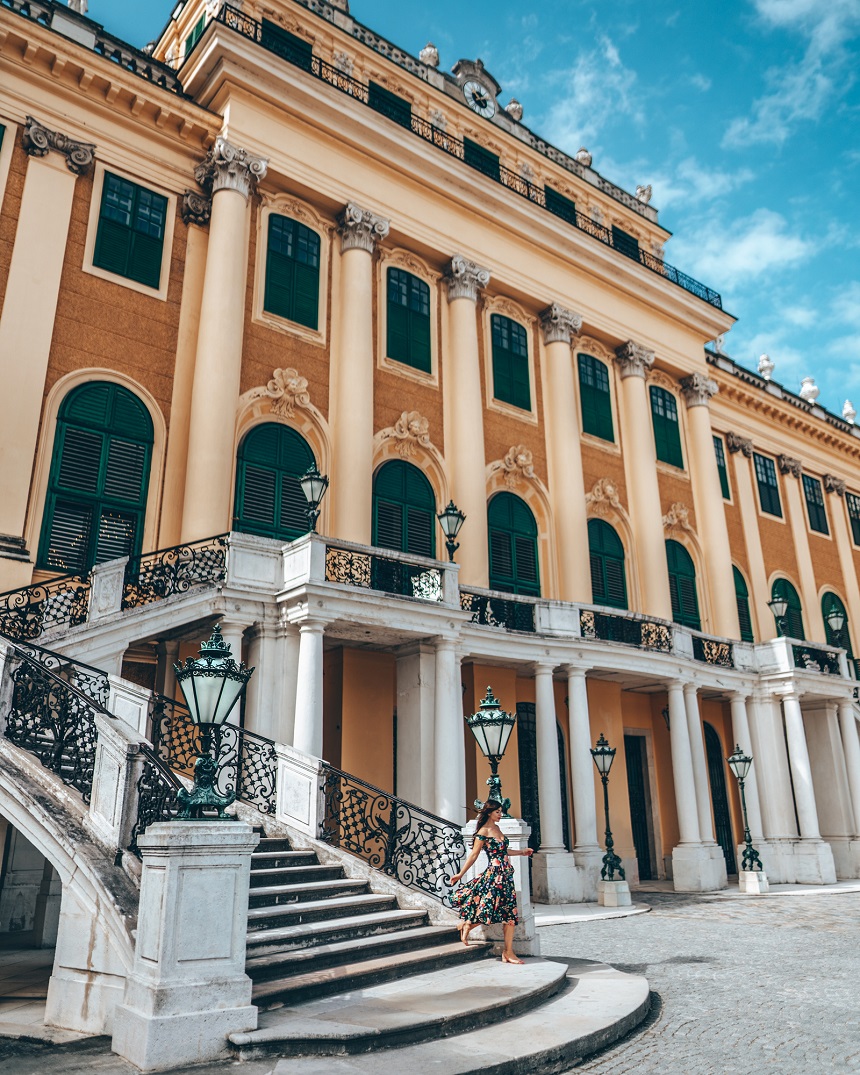
Vienna in spring looks like a storybook — cherry blossoms, pastel facades, and the massive Schonbrunn Palace grounds in full bloom. But the weather is a trickster. You’ll get 18°C sunshine at 2 PM and a 10°C drizzle by 4 PM. This guide covers the exact outfit strategy to stay comfortable across the palace interiors, the Great Parterre gardens, and the Gloriette hill without looking like you packed for a polar expedition.
Why Spring in Vienna Demands a Specific Wardrobe Strategy
April and May in Vienna average 10-18°C (50-65°F). That sounds mild. It isn’t. Three specific factors ruin a day at Schonbrunn if you dress wrong:
1. Microclimates within 200 meters. The palace interior is kept at a steady 20°C for artifact preservation. Step outside into the Privy Garden and you’re hit with direct sun and a breeze off the Danube. The Gloriette hill is 2°C colder at the top than the courtyard. You’ll be peeling layers on and off every 45 minutes.
2. Cobblestones and gravel paths. The main courtyard uses smooth cobbles. The gardens use crushed gravel. The walk from the palace to the Gloriette is 1.2 km uphill on uneven stone. Heels or thin flats will hurt by the Neptune Fountain.
3. No coat check for the gardens. You can leave a coat at the palace cloakroom (€1.50 per item, cash only). But once you exit into the park, you’re carrying everything you brought for 3-4 hours. Every gram matters.
The core problem: you need a system that handles a 10°C temperature swing, 4 hours of walking, and zero storage space. A single jacket won’t cut it.
The 3-Layer System That Works Every Time
Ignore fashion blogs that recommend a single trench coat. A trench is fine for the photo, useless when you’re sweating at the Orangery or shivering at the Zoo exit. Use this three-layer setup instead.
Base Layer: Merino Wool or Synthetic (Not Cotton)
Cotton absorbs sweat and stays wet. When the wind picks up at the Gloriette, wet cotton drops your skin temperature fast. Merino wool (150-180 gsm weight) wicks moisture and doesn’t smell after a day of sightseeing. A Uniqlo Airism or Patagonia Capilene Cool Daily shirt works too — $25-35, dries in 20 minutes.
If you run warm, a short-sleeve merino tee is fine. If you run cold, long-sleeve. Don’t overthink this layer — it’s invisible under everything else.
Mid Layer: A Lightweight, Packable Insulator
This is the piece that does the heavy lifting. You need something that provides warmth at 10°C but compresses to fist-size in your daypack. Two options:
- Patagonia Nano Puff Hoody ($279, 340g). 60g PrimaLoft Gold insulation. Packs into its own pocket. Handles light rain for 10 minutes before wetting out.
- Uniqlo Ultra Light Down Vest ($50, 200g). Cheaper, less durable, but fine for a single trip. Down loses insulation when wet — avoid if rain is forecast.
Wear this over the base layer inside the palace. When you step outside into 16°C sun, unzip it. If it warms up further, stuff it in your bag.
Outer Layer: Windproof, Not Heavy
You don’t need a winter parka. You need a shell that stops the wind and handles a light shower. The Arc’teryx Beta LT ($399, 370g) is overkill for a city trip. The Outdoor Research Helium Rain Jacket ($149, 180g) is lighter and packs smaller. The North Face Venture 2 ($99, 340g) works fine for occasional use.
Verdict: For most people, the Uniqlo Ultra Light Down Vest + Outdoor Research Helium Rain Jacket combo costs $200 total, weighs 380g combined, and covers 90% of spring Schonbrunn conditions. Don’t spend more unless you’ll use the gear for hiking later.
Shoes Are Not Optional — Pick These or Regret It
The walk from Schonbrunn’s main entrance to the Gloriette viewpoint and back is 3.2 km on mixed surfaces. The gardens have 400,000 square meters of terrain. You will walk more than you expect. Shoes are the single most common mistake I see tourists make.
What Works
| Model | Price | Weight | Why It Works at Schonbrunn |
|---|---|---|---|
| Blundstone 585 Chelsea Boots | $210 | 480g per boot | Grippy sole for gravel, waterproof for puddles, looks sharp with dresses or pants. No break-in needed. |
| Merrell Moab 3 Low WP | $140 | 380g per boot | Vibram sole handles wet cobblestones. Waterproof membrane. Ugly but functional. |
| Allbirds Tree Runners | $98 | 230g per shoe | Great for dry days, zero grip on wet stone. Only wear if forecast is 100% dry. |
| Veja Campo Sneakers | $150 | 350g per shoe | Fashionable, flat sole. Acceptable for palace interior, bad for gravel paths. Bring blister plasters. |
Bottom line: If you own Blundstones or similar Chelsea boots, wear them. If not, buy the Merrell Moab 3 — they’re ugly but your feet will thank you after 8 hours of walking.
What to Avoid
Thin canvas sneakers (Vans, Converse) with no arch support. Heeled boots of any height — the gravel paths shift under weight. Sandals — the temperature drops too fast and the gravel hurts. New shoes you haven’t broken in for at least 50 km of walking.
The Gloriette Walk — Timing, Temperature, and What to Carry
The Gloriette is the big arch on the hill behind the palace. The walk is 1.2 km uphill from the palace back door, elevation gain about 60 meters. At a normal pace, it takes 25 minutes up, 15 minutes down. Most tourists do this midday.
Temperature gradient: The courtyard sits at base temperature. The tree-lined avenue up the hill is shaded and 2-3°C cooler. The Gloriette platform is exposed to wind and feels 4-5°C colder than the courtyard. You will want your mid layer zipped up at the top. You will want it off again by the time you descend back to the Neptune Fountain.
Practical execution: Start at 10 AM when the palace opens. Tour the interior (1.5 hours, 20°C, no jacket needed). Exit into the gardens around 11:30 AM. Walk to the Gloriette, take photos, walk down. By 1 PM you’ll be at the café near the Orangery for lunch. The whole loop takes 3 hours. Carry a daypack (Osprey Daylite Plus, $75, 20L) with your mid layer, a 500ml water bottle, and a small umbrella. The palace grounds have one water fountain near the Zoo entrance — fill up there.
Failure mode: Tourists who skip the mid layer and wear only a heavy coat. They sweat inside the palace, take the coat off, carry it for 3 hours, and get cold when the sun goes behind clouds. Don’t be that person.
When the Weather Lies — Rain, Wind, and Sudden Cold
Vienna’s spring forecast is accurate about 60% of the time. The other 40%, you get surprises. Here’s what actually happens and how to handle it.
Sudden Rain Showers
April averages 12 rainy days. The rain is usually light (2-5mm per hour) but persistent. The palace gardens have very few covered areas. The maze, the Privy Garden, and the Orangery garden all require walking in the open. If you don’t have a waterproof outer layer, you’ll be wet for 45 minutes until it stops. A $10 disposable poncho from a souvenir shop works in a pinch — buy one at the Spittelberg market or a Billa supermarket before you go.
Wind at the Gloriette
The Gloriette sits on a ridge. Wind speeds at the top average 25-35 km/h on a breezy day. That turns 14°C into a felt temperature of 8°C. A thin windbreaker stops this completely. A knit cardigan does not. This is why the outer layer needs to be windproof, not just warm.
Temperature Drop After 4 PM
The palace grounds close at 5:30 PM in spring. By 4:30 PM, the sun drops behind the palace and the temperature falls 5°C in 20 minutes. If you’re still in the gardens, you’ll feel it fast. Keep your mid layer accessible, not buried at the bottom of your bag.
Verdict: Check the wind forecast, not just the temperature. A day with 15°C and 30 km/h wind requires the same clothing as a 10°C calm day. The Outdoor Research Helium jacket handles both. A cashmere scarf adds 3°C of warmth for zero pack weight — bring one.
The Cost of Getting It Wrong — Real Numbers
Dressing wrong at Schonbrunn costs more than comfort. Here’s the math.
Scenario A: You wear a single heavy coat. You sweat inside the palace. You carry it for 4 hours. Your shoulders ache. You skip the Gloriette walk because you’re tired of holding the coat. You miss the best view in Vienna. Cost: €0 in money, but you wasted the €22 entry ticket (or €44 for the Grand Tour with audio guide).
Scenario B: You wear thin sneakers. By the Neptune Fountain, your feet hurt. By the Zoo, you have blisters. You cut the gardens short and take the shuttle train back (€8 per person, cash). You buy blister plasters at the pharmacy (€4.50). You spend the evening soaking your feet instead of going to a Heurigen wine tavern. Cost: €12.50 plus lost evening.
Scenario C: You pack the 3-layer system. You wear the base layer all day. You put the mid layer on and off 4 times. The outer layer stays in your bag until a 10-minute drizzle. You walk the full 3.2 km loop, see everything, and still have energy for dinner. Cost: $200-400 for the gear, which you now own for your next trip.
The gear pays for itself in one trip if you avoid the mistakes above. The Patagonia Nano Puff and Blundstones will last 5+ years of travel. The Uniqlo vest might last 3 seasons. Either way, the per-trip cost is lower than a single day of discomfort.
Takeaway: Spend $200 on a merino base layer, a packable mid layer, and a windproof shell. Wear Chelsea boots or trail shoes. Check the wind speed, not just the temperature. That’s the entire strategy for spring at Schonbrunn. Nothing else matters.