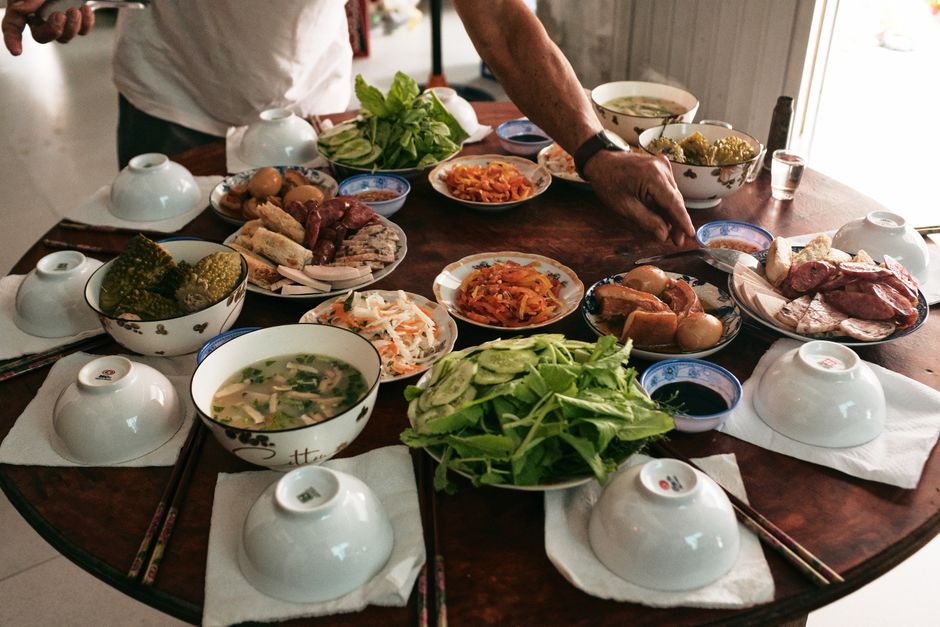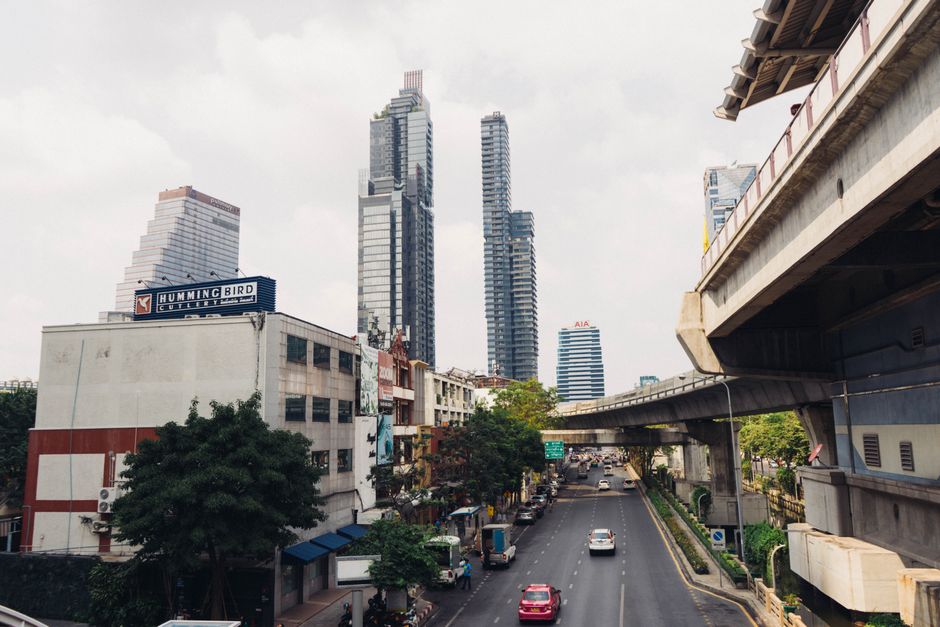
Bangkok’s street food scene serves roughly 500,000 meals per hour during peak dinner windows. Food poisoning rates among tourists? Lower than most people assume. The problem isn’t street food. It’s which street food stall you pick and when you eat from it. Locals don’t gamble. They read signals. Here’s what they look for.
Why Most “Street Food Horror Stories” Start at the Wrong Stall
First principles. A street food stall is a tiny restaurant without walls. The same rules apply: turnover, temperature, and technique. When a stall serves 200 plates of pad kra pao between 6pm and 9pm, nothing sits long enough to grow bacteria. When a stall serves 15 plates in four hours, that pork sat in a warming tray since lunch. That’s the entire game.
Tourists get sick because they pick stalls based on ambiance — string lights, a nice sign, a smiling vendor. Locals pick based on velocity. A long queue of Thai office workers at 12:15pm? That’s a health certificate in human form. An empty stall at 7pm with pre-cooked noodles stacked in plastic bags? Walk away.
The Thai Food and Drug Administration (Thai FDA) does inspect street vendors, but enforcement is inconsistent. The Bureau of Food and Water Sanitation under Thailand’s Ministry of Public Health runs a “Clean Food Good Taste” certification program. Look for a small green sticker with a white chef hat icon. It’s not a guarantee, but it means the vendor at least registered with local health authorities. Most stalls in Bangkok’s Yaowarat (Chinatown) and Chiang Mai’s Night Bazaar have gone through this.
The Three-Signal Test
Before you order anything, run this check:
- Signal 1: Fire and ice separation. Raw meat should sit on ice or in a cooler. Cooked food should sit over heat or be made to order. If you see raw chicken sitting next to a finished curry at room temperature, that’s cross-contamination waiting to happen.
- Signal 2: The vendor’s hands. One hand handles money. The other handles food. Good vendors use tongs, gloves, or a spoon. If the same hand that takes your 20-baht note then grabs your spring roll wrapper, skip it.
- Signal 3: Wok temperature. The wok should roar. A proper Thai street wok hits 350-400°C. Food cooks in 60-90 seconds. If the vendor stirs slowly and nothing sizzles, the oil isn’t hot enough and the food is stewing, not frying.
That’s it. Three checks. Ten seconds. You’ve eliminated 80% of risky stalls.
Market Navigation: Where to Stand, What to Touch, What to Say
Thai markets aren’t chaotic. They’re organized by unwritten rules. Learn them and you move like a regular. Ignore them and you’ll overpay, block foot traffic, and annoy vendors who’ve been working since 4am.
Rule one: Walk left, pass right. Thai markets follow the same flow as Thai roads — keep left. If you’re browsing, hug the left side. If you’re moving, pass on the right. It sounds trivial until you’re in Chatuchak Weekend Market with 200,000 other people and you’re the only one walking against the current.
Rule two: Point with your thumb, not your index finger. Pointing with an index finger at a person or a food item reads as aggressive. Use your thumb or an open palm. It’s a small thing that vendors notice immediately.
Rule three: Know your numbers. Most vendors don’t speak fluent English. You don’t need Thai. You need numbers. Learn to say neung (one), song (two), saam (three), and mai phet (not spicy). Or just hold up fingers. Vendors appreciate the effort and you’ll get better portions.
What to Touch (and What Never to Touch)
Touch produce only if you’re buying. Squeezing a mango and putting it back is a fast way to get a vendor’s attention — and not the friendly kind. At fruit stalls, let the vendor select. They know which mango is ripe today. If you must choose, point.
Never touch money and then food. This is the same rule vendors follow. When you hand over cash, use your right hand. The left hand is traditionally reserved for personal hygiene in Thai culture. Handing money with your left hand is considered rude.
The Specific Dishes That Are Always Safe (and Three That Aren’t)
Here’s the part where I stop being diplomatic. Some Thai street dishes are structurally safer than others. Not because of the vendor — because of the cooking process itself.
| Dish | Why It’s Safe | Risk Level | Best Time to Eat |
|---|---|---|---|
| Pad Thai (stir-fried noodles) | Cooked to order at 350°C+ in a wok. Nothing raw survives. | Low | Lunch or dinner rush |
| Som Tam (papaya salad) | Raw papaya, raw garlic, raw chili, raw lime, fish sauce. No heat step. Depends entirely on vendor’s prep hygiene. | Medium-High | Only at busy stalls with clean mortar and pestle |
| Moo Ping (grilled pork skewers) | Grilled over charcoal at high heat. But often pre-cooked and re-heated. Check if skewers sit over coals or in a glass case. | Medium | When you see fresh skewers hitting the grill |
| Khao Man Gai (chicken rice) | Poached chicken held at safe temperature. Rice cooked in chicken broth. Popular stalls sell out by 2pm. | Low | Morning to early afternoon |
| Oysters and raw shellfish | Served raw. No heat step. Depends on ice storage and sourcing. Even locals get sick from bad oysters. | High | Only at dedicated seafood stalls with heavy turnover |
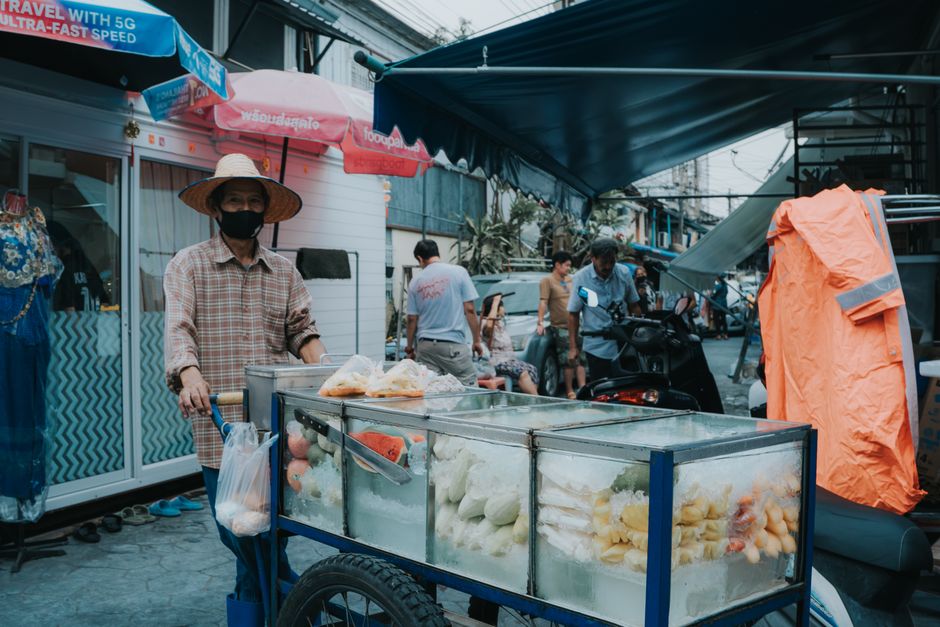
| Pre-cut fruit in plastic bags | Cut hours ago, sitting at ambient temperature. Sugar + moisture + heat = bacteria growth. | High | Buy whole fruit instead |
My pick? Pad Thai from a busy stall at Thipsamai in Bangkok’s Old Town. They’ve been cooking the same dish since 1966. The wok never stops moving. The line wraps around the block. It’s the safest street food in the city because it’s the fastest-moving food in the city.
Som tam is the one that surprises people. Raw papaya salad with fermented fish sauce and raw garlic. Delicious. But it’s a cold dish with no kill step. If you want som tam, order it at a stall where you watch them pound it fresh in a clay mortar, not one where it sits pre-made in a plastic tub.
Water, Ice, and the One Mistake Every First-Timer Makes
You know the advice: don’t drink tap water in Thailand. Fine. But here’s what nobody tells you: ice in Thailand is safer than tap water in most Western cities. Commercial ice in Thailand comes from factories inspected by the Thai FDA. Look for ice with holes in the cubes — that’s machine-made tube ice from a commercial plant. Crushed ice is riskier because it may be made locally from unfiltered water.
The mistake every first-timer makes? Ordering a fruit smoothie from a stall with a blender that hasn’t been rinsed since the last customer. The blender blades trap fruit pulp. That pulp sits at 35°C in the Bangkok heat. Then your smoothie gets blended with the previous customer’s fermented mango residue. Ask the vendor to rinse the blender with bottled water before your order. It costs you 10 seconds and saves you a night in the bathroom.
Bottled water is everywhere. Singha, Chang, and Crystal are the three big brands. A 600ml bottle costs 10-15 baht at a street stall, 7 baht at 7-Eleven. Buy from 7-Eleven when you can. The markup at tourist-area stalls is 100% or more.
If you get mild stomach upset — and at some point, you probably will — activated charcoal capsules from any Thai pharmacy cost about 40 baht for a strip of 10. Pharmacists in Thailand are trained to handle traveler’s diarrhea. Tell them “food poisoning” and they’ll hand you charcoal and an electrolyte packet. No prescription needed. The electrolyte brand to know is Dechamp — it’s the Thai version of Pedialyte and it works.
Skip the ice in rural areas. In Bangkok, Chiang Mai, Phuket, and other major tourist hubs, commercial ice is standard. In a tiny village in Isaan where the ice comes from a family freezer? Pass.
When to Skip Street Food Entirely
Here’s the verdict nobody wants to hear: if you have a flight in the next 24 hours, skip the street food. Food poisoning hits 6-24 hours after exposure. Getting on a 14-hour flight to London with the first wave of Bangkok belly? That’s a travel nightmare you don’t recover from quickly. Eat street food in your first days in Thailand, not your last.
Other times to skip it:
- You’re immunocompromised or pregnant. The risk profile changes completely. Stick to food courts in malls like Terminal 21 or ICONSIAM, where vendors follow stricter health codes.
- The stall is empty at peak hours. If it’s 12:30pm and the pad thai stall next door has a 20-person queue while this one has zero customers, there’s a reason. Locals know something you don’t.
- You see raw meat sitting next to cooked food. This is the cross-contamination red flag. No exceptions.
- The vendor won’t cook it fresh. If you ask for fresh and they point to a pre-cooked pile, walk away. Good vendors cook to order.
Street food in Thailand is one of the best food experiences on the planet. The risk isn’t the food itself. It’s your selection process. Read the signals. Follow the locals. And if a stall has been serving the same dish for 40 years with a line out the door, order two plates.