The Cape of Good Hope is not the southernmost point of Africa. Most people arrive in Cape Town believing they are heading to the bottom of the continent. They are not. Cape Agulhas, about 170km to the east, holds that title. It is a small thing, but it captures exactly how Cape Town operates: you think you know what you are getting, and reality hands you something better and stranger. Here is what actually surprised us.
The Weather Is Basically Four Seasons Before Lunch
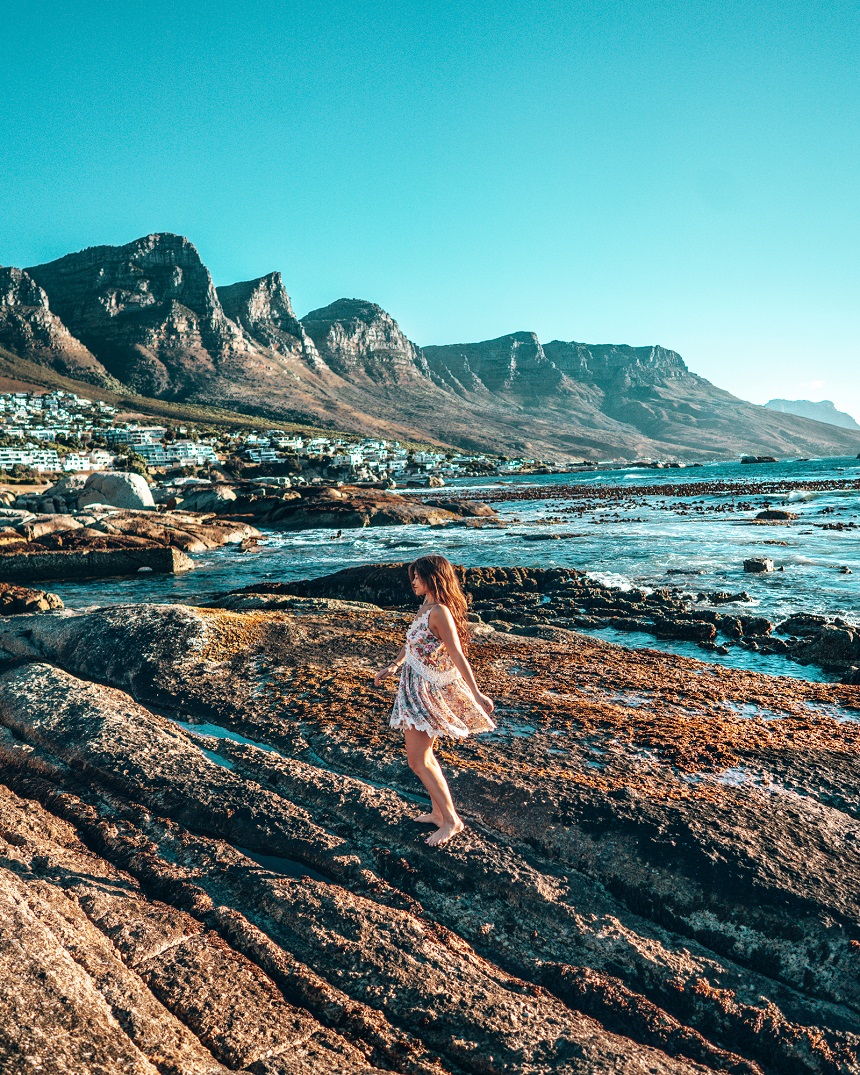
Cape Town sits where the Atlantic and Indian Oceans meet, which sounds poetic until you are standing on Signal Hill in a T-shirt watching a wall of cloud swallow Table Mountain in real time.
The city runs on a Mediterranean climate — warm, dry summers from November through March, wet and cool winters from June through August. That is the official story. The Cape Doctor complicates it considerably.
What Is the Cape Doctor?
The Cape Doctor is the southeaster wind that hammers Cape Town from spring through summer. It regularly hits 60–80 km/h. Locals take it personally. It keeps the bay air clean and the ocean color spectacular, but it will flatten your umbrella at a Camps Bay beach restaurant and close the Table Mountain cable car for days at a stretch.
Restaurants on the Atlantic Seaboard track wind direction and seat guests accordingly. Places like Café Caprice on Camps Bay beachfront have dedicated windbreak systems. Ask for an inside or sheltered table when the southeast is blowing. You will enjoy the meal significantly more.
The Microclimate Problem
Cape Town has multiple distinct microclimates within 20km of each other. Constantia can be 28°C and sunny while Simon’s Town is cold and overcast. The Southern Suburbs get mist when the city bowl is clear. Kalk Bay runs different weather from Clifton, sometimes simultaneously.
Pack layers regardless of season. Even in February, bring something windproof. This is not cautious tourist advice — the weather will change on you mid-day. The Table Mountain cable car closes for wind or cloud far more often than official tourism materials suggest. Do not book anything that depends on it running on a specific morning.
The surprise is not that Cape Town has four seasons. It is that it has them across different neighborhoods, simultaneously, within the same afternoon.
Safety Is More Complicated Than Your Travel Advisory Suggests
South Africa has one of the highest violent crime rates in the world, and parts of Cape Town — specifically the Cape Flats — are genuinely dangerous. That is not up for debate. But the blanket framing that appears in government travel advisories causes visitors to either dismiss all risk or avoid the city entirely. Both outcomes are costly.
Here is the honest version.
Where Tourists Actually Run Into Problems
Petty theft around Cape Town Station and the taxi rank area near Strand Street. Opportunistic bag-snatching near Green Market Square after dark. Unofficial guides near the cable car base who approach tourists and expect payment. These are real but manageable risks — the same category you would navigate in Madrid, Lisbon, or Buenos Aires. Basic urban awareness applied consistently is enough.
Do not walk around with your phone out in unfamiliar areas. Do not leave bags visible in a parked rental car. Do not accept unsolicited help from strangers near tourist sites. Standard city travel discipline, nothing more exotic than that.
What Is Actually Safe and Worth Doing
The V&A Waterfront, De Waterkant, Camps Bay, Green Point, the Winelands, the entire Cape Peninsula coastline — millions of visitors move through these areas without incident. Boulders Beach, Chapman’s Peak Drive, Simon’s Town: all safe, all worth making time for.
Township tours with reputable operators like Coffeebeans Routes or Awol Tours are among the best experiences available in the city. Langa and Khayelitsha are genuinely safe with a knowledgeable guide, and the context you gain reframes the whole city. We would book one of these before any wine tasting. The mistake is treating Cape Town as either fully safe or fully dangerous. Know where you are going and why, and you will be fine in most of the places worth going.
What Things Actually Cost (Compared to What You Expected)
The rand makes Cape Town look deceptively affordable. It is cheap — until you book three big-ticket activities in one day and wonder how you spent the equivalent of R3,000 before lunch. Here is what we actually paid.
| Item | Cost (ZAR) | Cost (USD approx.) |
|---|---|---|
| Table Mountain Cable Car, return ticket | R490 | ~$27 |
| Boulders Beach penguin colony entry | R360 | ~$20 |
| Cape Point Nature Reserve entry | R400 | ~$22 |
| Uber: City Bowl to Camps Bay | R80–110 | ~$4–6 |
| Airbnb apartment, mid-range (per night) | R900–1,600 | ~$50–88 |
| Lunch at a mid-range restaurant | R200–350 per person | ~$11–19 |
| Glass of local wine at a restaurant | R65–90 | ~$3–5 |
| Wine tasting in Stellenbosch or Franschhoek | R150–250 per person | ~$8–14 |
| Chapman’s Peak Drive toll (one way) | R55 | ~$3 |
| Small car rental per day | R650–950 | ~$36–52 |
| Dinner at The Test Kitchen (tasting menu) | R1,500–2,000+ per person | ~$82–110 |
The major Peninsula activities — cable car, penguin colony, Cape Point — stack up fast if you are doing all of them in two days. Budget for activity costs separately from accommodation and food. Woolworths Food and Pick n Pay supermarkets are excellent for self-catering breakfasts and lunches without sacrificing quality.
The Penguin Colony at Boulders Beach Is Not Optional
African penguins live in a wild colony at Boulders Beach, 45 minutes south of the city near Simon’s Town. You walk boardwalks within meters of them. They bray like donkeys, smell like a fish market, and are completely absurd in the best possible way. This is not a zoo or a wildlife park — it is a natural habitat where roughly 3,000 wild birds have decided to live on a suburban beach. Skip it and you will regret it for the rest of the trip. Nothing else in Cape Town delivers this specific combination of ridiculous and genuinely wild.
Getting Around Without a Car Is Harder Than It Looks
Is the MyCiTi bus network actually useful for tourists?
For a handful of routes, yes. The airport to the CBD, the CBD to the V&A Waterfront, and along the Atlantic Seaboard toward Sea Point — MyCiTi works and costs almost nothing (R15–30 per trip). For anything south of the city center — Boulders Beach, Chapman’s Peak, Kalk Bay, Cape Point — the network does not reach. You need a different solution for those.
Is Uber safe and reliable in Cape Town?
Yes, straightforwardly. Cape Town is one of the more reliable Uber markets we have used. Cars arrive quickly, pricing is transparent, and a 25-minute ride from the V&A Waterfront to Camps Bay costs about R100 ($5.50). Drivers are professional, routes run through Google Maps, and surge pricing is mild compared to London or New York. We used Uber exclusively for city-area movement across ten days without a single issue.
One addition: Uber Eats works exceptionally well here if you are self-catering. Selection includes proper local restaurants, delivery is fast, and it saves time on nights when you have already walked too much.
When does renting a car actually make sense?
For any full Peninsula day trip — Boulders Beach, Cape Point, Chapman’s Peak Drive — rent a car. The flexibility to stop wherever you want on Chapman’s Peak alone justifies the cost. Avis and Budget both operate from Cape Town International; book in advance during December through February peak season. Expect R650–950 per day for a small automatic. Roads are in good condition and driving is on the left.
One firm recommendation: do not try to combine Cape Point and the Winelands in the same day. They are in opposite directions and you will rush both. One per day.
The Food Goes Way Beyond Braai
Braai is real, worth experiencing, and genuinely a social institution rather than just a cooking method. But it is one note in a food story that Cape Town undersells internationally.
- Cape Malay cuisine is the biggest surprise for most international visitors. Bo-Kaap Kombuis in the colorful Bo-Kaap neighborhood serves bobotie, samoosas, and koeksisters in the actual community where this food originated. Not a tourist restaurant — the real source.
- The Winelands are only 45 minutes away. Stellenbosch and Franschhoek produce serious wine. A tasting flight at Delheim Estate or Tokara winery runs R150–200 per person. Comparable quality in Napa Valley or Burgundy costs five to ten times more.
- Seafood is a legitimate strength. Cape rock lobster, called crayfish locally, is the premium local ingredient. Harbour House at the V&A Waterfront serves it well without absurd markup relative to quality.
- Kalky’s in Kalk Bay is the best-value meal in the city. A tiny shack where the daily catch comes straight off the boats. Fish and chips for R80–110. Cash only, no ambience, queue expected. Do not skip it.
- The Test Kitchen in Woodstock remains one of the best restaurants in Africa. Chef Luke Dale-Roberts runs a tasting menu at R1,500–2,000+ per person. Book months ahead for peak season. Worth every rand if fine dining matters to you.
- Craft beer is a real scene here. Devil’s Peak Brewery and Cape Brewing Company both have taprooms open to visitors. Devil’s Peak’s King’s Blockhouse IPA is genuinely good, not just locally good.
The food culture blends Cape Malay spice, Dutch settler tradition, British colonial history, and Mediterranean sunshine into something that does not map onto any single cuisine you already know. That is the point.
Table Mountain Rewards Patience and Punishes Schedules
Do not book anything that depends on the Table Mountain cable car running on a specific day. This is the single most consequential logistical lesson from our entire trip.
The cable car closes for wind, cloud, maintenance, and sometimes no obvious reason — sometimes for three or four consecutive days. Tourists who pre-booked guided tours built around cable car slots lost both money and time. The official Table Mountain Aerial Cableway website shows daily operational status. Check it the morning you plan to go, not a week in advance. Flexibility here is not optional.
Hiking versus the cable car — which is actually better?
The Platteklip Gorge trail takes 1.5–2 hours up and is not technical. No climbing equipment, no specialist fitness level required — it is a steep, maintained path with clear signage. The reward: the summit without a R490 ticket, and a crowd roughly one-fifth the size of cable car arrivals. You can still ride the cable car down if your knees object.
Bring 2L of water per person, SPF 50 sun protection, and a windproof layer. Start before 9 AM to avoid midday heat and afternoon cloud buildup. The views from the summit are identical whether you walked up or rode. The walk earns them more.
When is the best time to actually visit Cape Town?
March through May is the sweet spot. Summer crowds thin out, the Cape Doctor eases off, temperatures stay comfortable at 18–24°C, and the autumn light is exceptional. December and January are peak season — busier cable car queues, higher accommodation prices, and the worst of the wind. Worth avoiding if you have flexibility.
Winter (June–August) is wet but mild by global standards. Rainfall concentrates on the Atlantic Seaboard. Some visitors specifically prefer it for empty trails and dramatically moody mountain light that clear blue-sky days cannot produce. Cape Town’s winter is nothing like a northern European or East Coast American winter — the city stays fully operational and the prices drop significantly.
Come with flexible plans, no fixed cable car tickets, and genuine curiosity about a city that does not look like anywhere else on earth.