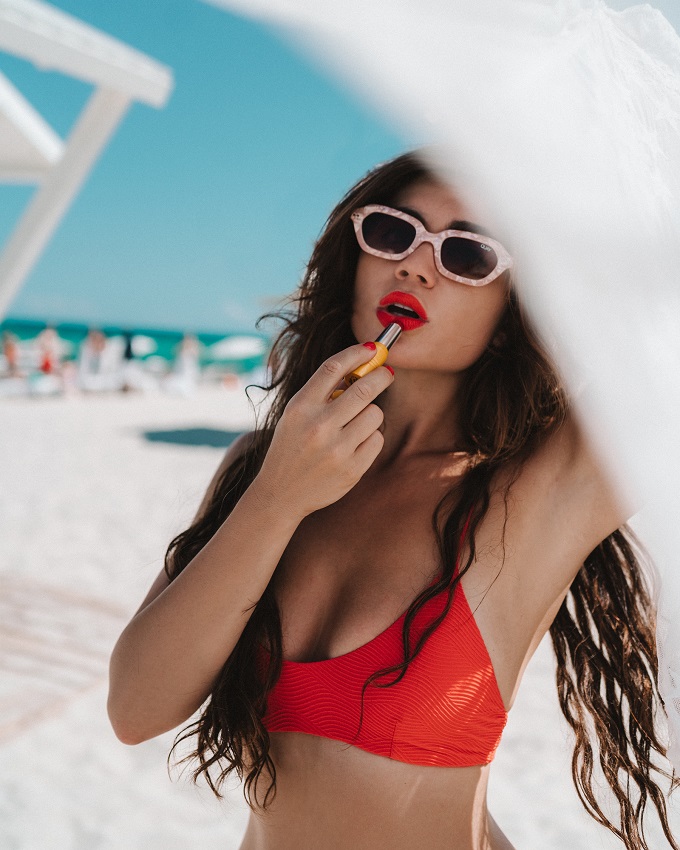
Are your lips surviving Miami summer — or quietly suffering while you’re chasing the perfect poolside photo?
Miami is unlike most travel destinations when it comes to skincare. The combination of 91°F heat, 80%+ humidity, relentless UV, salt air, and aggressively air-conditioned hotels creates a specific type of lip damage that your usual balm cannot fix. L’Occitane’s shea-based lip line has earned a following among warm-weather travelers for real reasons — but buying the wrong product from their range, or using the right one the wrong way, means paying $12 for something that stops working by noon.
Here’s exactly what to pack, what to layer, and what to leave home.
Why Miami Heat Destroys Lip Balms That Work at Home
Most lip balms are designed for cold, dry winters. That’s the baseline climate most brands formulate around. Miami is the opposite.
The average Miami July day runs around 91°F with humidity between 75% and 85%. That combination does two things simultaneously. First, it makes lips feel more hydrated than they actually are — moisture from the surrounding air temporarily plumps lip tissue, masking dehydration. Second, it breaks down the wax-based seals most balms rely on to hold that moisture in place.
Here’s the core biology. Lips have no sweat glands and no sebaceous glands — they cannot self-moisturize. Everything your lips get comes from what you apply or what the environment provides. In humid air, lips absorb some atmospheric moisture. This masks dehydration. By the time you actually feel dryness in Miami, your lip barrier is already significantly compromised.
Salt air makes it worse. Ocean salt is hygroscopic — it actively pulls moisture out of tissue on contact. Spending an afternoon on South Beach without lip protection is roughly equivalent to sitting under a dry HVAC vent for the same amount of time. The visible effects — cracking, peeling, tightness — typically show up 24 to 48 hours after the damage, once you’re back at the hotel. Repair takes three to five days.
UV compounds everything. Lips have almost no melanin, which is the pigment that provides baseline UV protection in skin. They burn faster than your nose, your cheekbones, and most other areas on your face. A full week of unprotected Miami sun causes structural changes to lip tissue that take weeks to fully reverse.
Which Lip Balm Formulas Fail in the Heat
Stick formats become soft and draggy above 85°F. They apply unevenly on hot skin, depositing too much product in one spot while skipping adjacent areas. The result is patchy coverage that wears off faster than a uniform layer would.
Petroleum-based products stay structurally stable in heat — petroleum jelly melts around 99°F — but they’re purely occlusive. They seal whatever moisture already exists in the lip tissue without adding anything. After swimming, eating, and extended sun exposure, there’s nothing left to seal, and the product just sits there doing nothing.
Fragrance-heavy balms are the worst choice for tropical environments. Fragrance ingredients — including natural ones like citrus oil and mint — sensitize lip skin faster under UV exposure. A lemon-scented balm that feels fine in January can trigger visible irritation and peeling during a Miami July beach day. If a balm’s main selling point is its scent, leave it home.
What Miami Lips Actually Need
An effective tropical lip product combines three things: an emollient (jojoba oil, sweet almond oil) to soften and smooth the lip surface; an occlusive layer (shea butter, castor oil) to seal moisture in; and SPF of at least 25 to block UV before it damages tissue. L’Occitane’s shea formula delivers the first two reliably. The SPF gap is real, and it’s the one problem you need to solve separately — which is entirely manageable with a simple layering approach covered below.
L’Occitane Lip Products That Survive Miami: How They Compare
Three products from L’Occitane are worth evaluating for a Miami trip. They’re not equal, and the best daytime option is not the most expensive one in the line.
| Product | Price | Format | SPF | Best Use | Miami Verdict |
|---|---|---|---|---|---|
| Shea Butter Ultra Rich Lip Balm | $12 | Stick, 8g | None | Intense overnight repair | Night use only — too waxy and heavy for daytime heat |
| Shea Butter Tinted Lip Conditioner | $14 | Stick, 4g | None | Light color and moisture | Best for evening city use; fades unevenly with humidity and direct sun |
| Fruity Lip Balm (Cherry or Raspberry) | $10 | Pot, 10ml | None | Daytime moisture, lighter formula | Top daytime pick from the range — pot format stays stable in heat better than any stick |
The Fruity Lip Balm in pot format is the clear daytime winner. Pot formats don’t soften and drag in heat the way sticks do, and the lighter shea concentration makes it more breathable at 90°F. The Cherry and Raspberry variants are functionally identical — the scent difference barely registers outdoors.
None of L’Occitane’s core lip products include SPF. For beach travel, that’s a meaningful limitation. The fix: layer EltaMD UV Lip Balm SPF 31 ($12, available at Ulta, Sephora, and most dermatology practices) as your base before applying L’Occitane on top. EltaMD uses zinc oxide — a physical UV blocker that sits on the skin surface rather than absorbing into tissue — and it remains stable in heat better than chemical UV filters like avobenzone. Apply EltaMD first, let it settle for 60 seconds, then apply the L’Occitane Fruity Balm on top. Two minutes total, and you’re protected for the next 90 minutes.
The L’Occitane Pivoine Line: Worth It for Evenings
The Pivoine Sublime Tinted Lip Balm (around $18 when in stock) is a more refined option for evening plans — dinner on Ocean Drive, walks through the Design District, rooftop bars on Collins Avenue. The light tint reads natural and the formula holds up reasonably in humidity. The one limitation: glossy finishes collect more airborne debris near the ocean. Save this one for after the beach day is done, not during it.
Your Miami Lip Routine, Step by Step
This covers a full beach day with evening plans. Total product investment: around $34 for the week.
- Clear overnight residue before anything else. If you used the L’Occitane Ultra Rich Lip Balm the night before, wipe off the remaining layer with a damp cloth. Stacking fresh product over dried balm creates a waxy buildup that blocks absorption rather than improving it.
- Exfoliate twice a week maximum. Use a damp washcloth, not a fragranced sugar scrub. Two gentle circular sweeps remove dead skin without stripping the barrier. Not daily — every other day at most during the trip.
- Apply EltaMD UV Lip Balm SPF 31 ($12) as your base. One full pass. Wait 60 seconds before the next step. That pause lets the zinc oxide settle instead of being immediately diluted by the product going on top.
- Apply L’Occitane Fruity Lip Balm ($10) over the SPF base. One thin layer, not thick. A heavy application in high humidity traps sweat against the lip surface and breaks down faster than a thin, even coat.
- Reapply every 90 minutes at the beach. SPF on lips wears off faster than on skin — eating, drinking, talking, and towel contact all accelerate breakdown. Set a phone alarm. This is the step most people skip, and it’s the one that causes the most post-trip damage.
- Reapply immediately after swimming. Both salt water and chlorinated pool water strip lip barrier products faster than sun exposure alone. Don’t wait for the next scheduled window after getting out of the water.
- Night: L’Occitane Shea Butter Ultra Rich Lip Balm ($12). This is where the formula genuinely earns its price point. Miami hotel air conditioning removes significant moisture while you sleep. A generous layer before bed counteracts overnight dehydration and does the bulk of your weekly lip repair.
The morning setup takes under three minutes. The reapplication is 30 seconds. Most people spend more time choosing what to order at the hotel coffee bar.
Lip Care Mistakes That Ruin Beach Vacations
Is SPF lip protection actually necessary, or is it marketing?
Necessary. Lips have almost no melanin — the natural pigment that provides baseline UV defense in skin. They burn faster than your nose, your forehead, and nearly any other area on your face. Repeated UV exposure causes actinic cheilitis, a chronic condition involving permanent drying, cracking, and discoloration that requires clinical treatment to reverse. After one week in Miami without UV lip protection, most light-skinned travelers notice visible peeling and structural changes that take two to three weeks to fully resolve at home. The math on prevention versus recovery time is not complicated.
Should I exfoliate daily when my lips are constantly flaking?
No. Daily exfoliation is the most common lip care mistake in warm climates, and it makes the problem worse. When lips feel flaky, the natural response is to scrub more. But lips need at least 48 hours between exfoliation sessions to rebuild the lipid barrier that protects them. Scrubbing daily removes that barrier before it can reform — which increases sensitivity to heat and salt, which causes more flaking, which triggers more scrubbing. Breaking this cycle requires patience: stop at twice a week. Flaking visibly improves within three days of cutting back.
Does applying more product give more protection?
It doesn’t. A thick coat of lip balm in high humidity creates a seal that traps sweat against the lip surface. In dry climates, heavy application works because there’s no ambient moisture to trap — the extra product just provides more barrier. In Miami’s humidity, the opposite happens. A thin, even application absorbs correctly and holds. A thick glob sits on the surface, becomes sticky in the heat, and breaks down faster than a properly thin layer would. One pass is enough. Two passes is too many.
Are tinted balms actually less moisturizing than clear ones?
Quality tinted balms — including L’Occitane’s line — use the same moisture base as their clear counterparts. The pigment doesn’t meaningfully reduce efficacy. The real Miami issue with tinted products: color fades unevenly in humidity and with repeated contact from food and drink, leaving a patchy look by midday. If uneven color bothers you, use a clear balm during beach and pool hours and switch to the tinted conditioner for the evening.
When to Skip L’Occitane and Go Drugstore Instead
If your Miami itinerary is more pool day than gallery walk, buy Jack Black Intense Therapy Lip Balm SPF 25 ($10 at Target or most pharmacies) and skip L’Occitane for daytime use entirely — it handles both moisture and UV in one product with no layering required, costs $4 less, and holds up in direct sun for a full afternoon. Save the L’Occitane Shea Butter Ultra Rich for overnight repair, where it still outperforms most mass-market options at that price point. The prestige-to-drugstore gap for daytime lip care in tropical climates is closing fast, and for straightforward beach days, it’s essentially already closed.