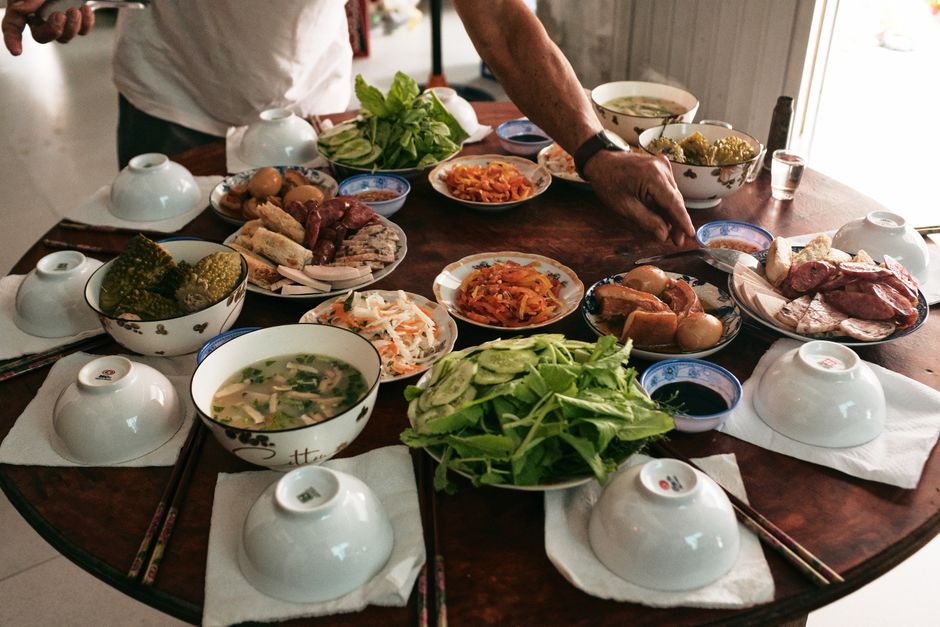
I’ve spent six weeks eating through Vietnam across three separate trips. Pho is fine. Banh mi is a solid $1 breakfast. But if you fly 14 hours to eat soup you can get in Garden Grove, you’ve wasted a ticket. The real reason to go is the food that never leaves the country.
Here’s what I’d cross a city for.
Bun Bo Hue: The Spicy Brother Pho Never Talks About
Hue’s signature soup makes Hanoi pho look like warm milk. The broth is built from beef bones and lemongrass, stained red with annatto oil, and loaded with shrimp paste. It smells funky for about three seconds before it makes sense. The default bowl comes with sliced beef shank, pork knuckle, and a cube of congealed pig blood. If that last part scares you, order it anyway. It tastes like iron-rich tofu.
I ate this five times in Hue. The best bowl I found was at a plastic-stool spot near Dong Ba Market where the broth simmered in a pot older than me. $1.50. Bun Bo Hue costs more in Hanoi and Saigon, usually $2-3, and the broth gets toned down for tourist palates. Eat it in Hue.
What to Order
- Ask for “bun bo hue day du” if you want the full works: blood cube, knuckle, and all.
- Squeeze the lime. Add the shredded banana blossom and mint. Don’t skip the chili oil.
- If you can’t handle heat, say “it cay” — less spicy. The default has a slow burn.
Where to Find It
In Hue, skip the restaurants with laminated menus. Go where the pot is nearly empty by 9am. Bun Bo Hue O Phuong on Nguyen Cong Tru street is a good starting point. In Hanoi, Bun Bo Hue An Cuu on Hoe Nhai does a decent version if you’re not heading to central Vietnam.
Cao Lau: The Noodle Dish That Only Exists in One Town
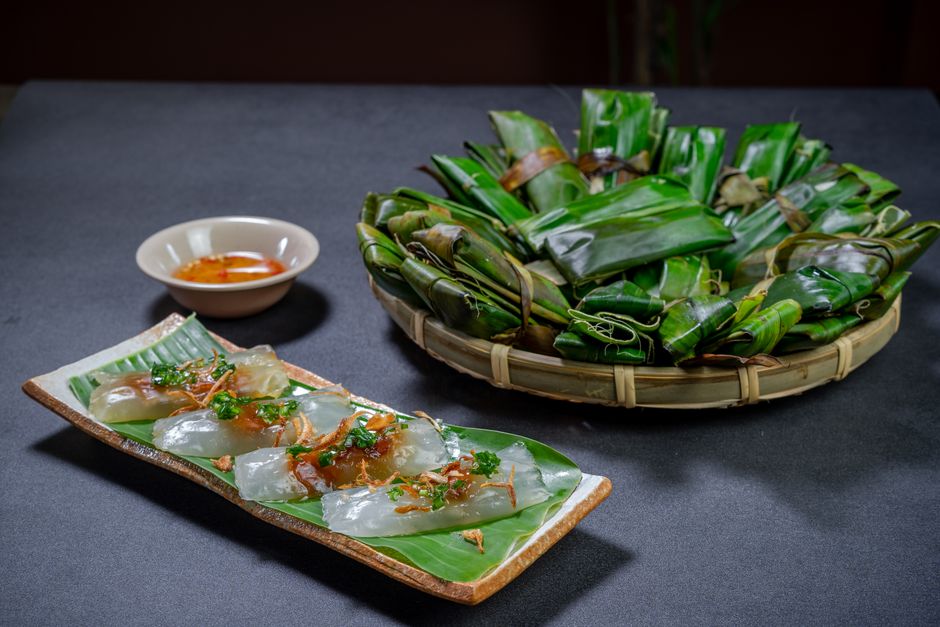
Hoi An’s Cao Lau is the most geographically locked dish I’ve ever eaten. The noodles are supposedly made with water from a specific well in the Cham Islands. The pork is sliced thin and marinated in soy and five-spice. The croutons are made from the same noodle dough, fried crisp. Then it’s all tossed with herbs and a splash of pork broth.
You cannot get this anywhere else. Not Saigon. Not Hanoi. The water story is probably marketing, but the texture of the noodles is genuinely different — chewy, almost alkaline, like a cross between udon and fresh ramen. The dish is dry, not soup. That confuses people expecting pho part two.
How to Spot a Bad Bowl
If the noodles are pale white and soft, you’re eating a knockoff. Real Cao Lau noodles have a yellow-gray tint and a bite. If the croutons are soft, send it back. They should shatter.
Best bowl I had in Hoi An: a stall inside the central market, second row from the back, run by a woman who’s been making it for 30 years. It costs about 35,000 VND ($1.40). She doesn’t have a sign. Look for the pot of dark broth and the pile of crisp croutons.
Mi Quang: The Most Underrated Noodle Bowl in Central Vietnam
Mi Quang comes from Quang Nam province, the same region as Hoi An. It’s a turmeric-yellow noodle dish served with just enough broth to coat the noodles — not a soup, not a stir-fry. The standard version comes with shrimp and pork, but I’ve had versions with frog, eel, and beef. The key is the peanut. Crushed roasted peanuts go on top, and they make the dish.
Here’s the thing nobody tells you: the broth should be eaten with the rice cracker. You break off a piece of the sesame rice cracker, dip it in the broth, and eat it as a spoon. It’s the best part. If your bowl doesn’t come with a rice cracker, you’re at the wrong stall.
In Da Nang, Mi Quang Ba Mua is the famous spot, but it’s gotten touristy. I preferred a small place on Le Hong Phong street where the lady added a quail egg for free. In Hoi An, Mi Quang Ong Hai is solid. Expect to pay $1-2 per bowl.
Regional Variations
- Quang Nam style: more broth, wider noodles, lots of peanuts.
- Da Nang style: less broth, more turmeric, often served with pork belly.
- Hoi An style: sweeter broth, more herbs, sometimes with chicken.
Banh Xeo: The Crispy Pancake That Tourists Eat Wrong
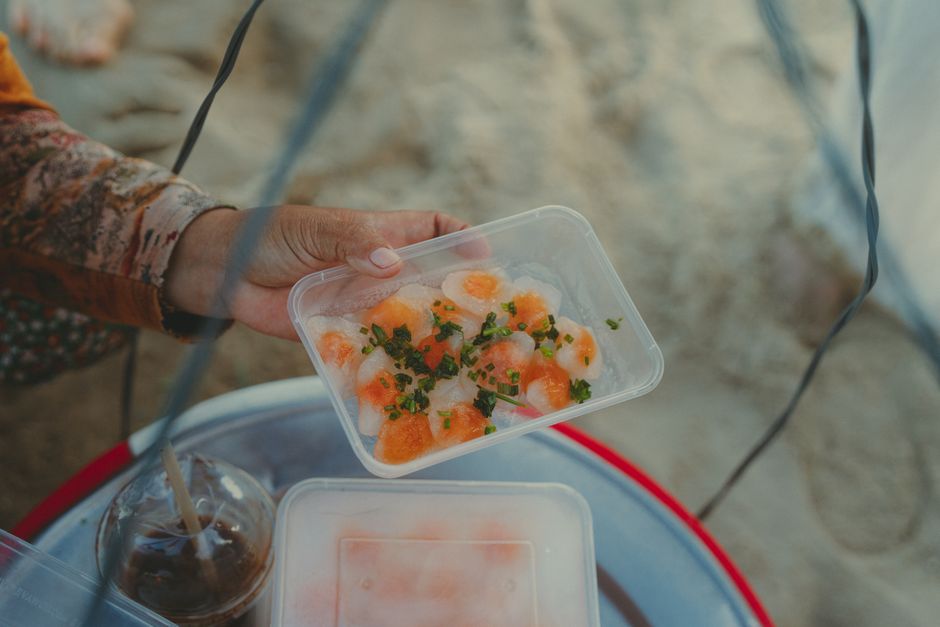
Banh Xeo is a crispy turmeric crepe folded over shrimp, pork, and bean sprouts. The name means “sizzling cake” — the batter hits the hot pan and makes a noise that sounds like “xeo.” In the south, it’s the size of a dinner plate. In Hue and Da Nang, it’s smaller and crispier.
The mistake most tourists make: they eat it with a fork. Wrong. You rip off a piece with your hands, wrap it in a sheet of rice paper with herbs and a strip of green banana, then dip it in nuoc cham. The wrap is the dish. Without the herbs and rice paper, you’re eating a greasy crepe. With them, it’s a completely different thing.
In Saigon, Banh Xeo 46A on Dinh Cong Trang is the classic. It’s been there forever and the crepes are the size of a steering wheel. In Da Nang, Banh Xeo Ba Duong is a hidden alley spot where you sit on tiny chairs and they bring you a stack of rice paper. $3 for a full meal.
Cha Ca: The Dish Hanoi Built a Street Around
Cha Ca is turmeric-marinated fish, usually snakehead or catfish, cooked tableside in a pan with dill and scallions. It’s served over cold rice noodles with peanuts, herbs, and shrimp paste. The dill is what makes it. You think dill is for pickles, then you taste it fried in fish fat and turmeric oil and you understand.
Hanoi has a whole street named Cha Ca Street. The most famous restaurant, Cha Ca La Vong, has been serving this one dish since 1871. It’s about $8 per person, which is expensive by Vietnamese standards, and some locals say it’s coasting on reputation. I ate there once. It was good, not great. The fish was a little dry.
The better move is Cha Ca Thang Long on Duong Thanh street. Same dish, half the price, and the fish comes out still sizzling in the pan. They refill your herbs without you asking. That’s the sign of a good spot.
The Table Setup
When the pan arrives, let the fish sit for 30 seconds to crisp on the bottom. Then stir. Add the shrimp paste sparingly — it’s fermented and strong. If you hate it, use nuoc mam instead. Mix the noodles, herbs, peanuts, and fish in your bowl. Eat fast. The noodles get gummy when they sit.
Table: Where to Eat Each Dish and What to Pay
| Dish | Best City | Specific Spot | Price (USD) | What to Watch For |
|---|---|---|---|---|
| Bun Bo Hue | Hue | Bun Bo Hue O Phuong, Nguyen Cong Tru | $1.50-2.00 | Blood cube and pork knuckle should be in the bowl |
| Cao Lau | Hoi An | Central market, second row stall | $1.40 | Yellow-gray chewy noodles, crisp croutons |
| Mi Quang | Da Nang | Small spot on Le Hong Phong street | $1.00-2.00 | Sesame rice cracker must be on the side |
| Banh Xeo | Saigon | Banh Xeo 46A, Dinh Cong Trang | $2.50-3.00 | Eat with rice paper wrap, not a fork |
| Cha Ca | Hanoi | Cha Ca Thang Long, Duong Thanh | $4.00-5.00 | Fish should arrive sizzling in the pan |
Three Rules for Eating Well in Vietnam Without a Guide
You don’t need a food tour. You need to know how to read a street stall. Here’s what I learned after eating from roughly 60 random stalls and getting sick exactly once.
- Follow the crowd, but not the tourist crowd. A stall full of Vietnamese office workers at 12:30pm is a good sign. A stall full of people holding Lonely Planet books is not. The food might still be fine, but you’ll pay double and the spice level will be nerfed.
- Eat where there’s one dish. The best stalls do one thing. If a menu has 40 items, it’s a tourist trap. If it has 3 items, the cook has made that dish 10,000 times.
- Check the turnover. Food sitting in a display case at 3pm has been there since 11am. Food being cooked to order, with a line of people waiting, is fresh. This is not complicated. Watch for 30 seconds before you sit down.
I broke rule three once in Nha Trang and paid for it with two days in a hotel bathroom. Don’t be me.
What I’d Skip Next Time
Egg coffee in Hanoi is overrated. It’s a gimmick — sweet egg foam on mediocre coffee. I’d rather drink a proper cà phê sữa đá from a street cart for 20,000 VND. And the famous Obama bun cha restaurant in Hanoi is fine, but the bun cha at a random stall near my hotel was better and had no line. Fame in Vietnam food culture is a lagging indicator.
The single most important takeaway: the best Vietnamese food is the dish that never leaves its hometown, so go to the hometown.