Italians consume roughly 14 billion espressos a year. And almost none of them are ordered the way guidebooks tell you to order them. Walk into any bar in Rome, Florence, or Naples and say “un espresso per favore” with a smile, and the barista will serve you. But they will also know you are not from here. That is fine. What is not fine is paying double, getting the wrong drink, or standing in the wrong line because nobody told you how the system actually works.
This is the phrasebook I wish someone had handed me before my first trip. No filler. Just the words, the rules, and the mistakes that cost you money and dignity.
The Four Phrases That Cover 90% of Orders
You do not need a dozen phrases. You need four. Master these and you will move through any Italian bar like you have lived there for years.
- “Un caffè, per favore.” (oon kahf-FEH, pehr fah-VOH-reh) — This is an espresso. Not a coffee. In Italy, “caffè” means espresso by default. If you want a drip coffee, you are in the wrong country. This costs about €1.10 at the counter in most cities.
- “Un cappuccino, per favore.” (oon kahp-poo-CHEE-noh) — Equal parts espresso, steamed milk, and foam. Order before 11 AM. Italians consider milk after a meal to be a digestive crime. Some bars will still make it for you at 3 PM. They will also judge you silently.
- “Un caffè macchiato, per favore.” (oon kahf-FEH mahk-kee-AH-toh) — Espresso “stained” with a small spoon of milk foam. This is the afternoon compromise. You get a touch of milk without the full cappuccino commitment.
- “Un caffè americano, per favore.” (oon kahf-FEH ah-meh-ree-KAH-noh) — Espresso diluted with hot water. This is the closest thing to American drip coffee. It is not the same. Accept it.
Say the phrase. Do not add “latte” to anything. In Italian, “latte” means milk. Order “un latte” and you will receive a glass of cold milk. Ask for “un caffè latte” and you will get espresso with hot milk, which is closer to what Americans think of as a latte, but nobody in Italy orders it that way. They order a cappuccino in the morning or a macchiato after.
Pronunciation That Does Not Embarrass You
Double consonants matter. “Cappuccino” has a double P and a double C. Hold each one for a split second longer than feels natural. “Kahp-poot-CHEE-noh.” Saying “capuccino” with one P is a common mistake. Baristas will understand you. They will also know.
“Caffè” ends with an open E sound. Not “café” like French. “Kahf-FEH.” The accent mark points down and to the left. That is the Italian grave accent, and it changes the vowel sound.
Stand at the Bar or Sit Down? The Price Difference Is Real
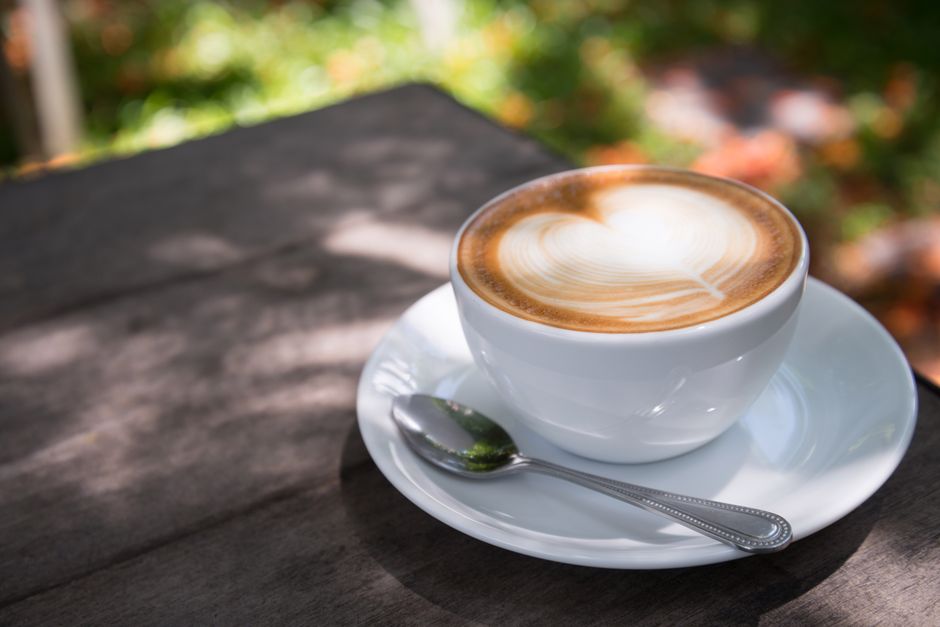
In most Italian bars, the same espresso costs two different prices. At the counter — “al banco” — you pay €1.10. At a table — “al tavolo” — you pay €2.50 to €4.00. Same coffee. Same cup. The difference is the chair.
This is not a scam. It is a service charge for table service. Italians almost always drink at the counter. They walk in, order, drink in 90 seconds, and leave. If you want to sit and people-watch for 30 minutes, the table price is worth it. But know what you are paying for.
How to order at the counter:
- Go to the cash register first. Pay for your coffee. You will get a receipt — “lo scontrino”.
- Take the receipt to the barista at the counter.
- Say your order. Place the receipt on the counter. The barista will take it.
- Drink your coffee standing up. Return the cup to the counter when done.
Some bars let you order directly at the counter and pay after. But the pay-first system is common in Rome, Milan, and Venice. Watch what locals do. If they walk to a register first, follow them.
What to Order When You Want Something Different
| Drink Name | What It Actually Is | Best Time | Approx. Price (Counter) |
|---|---|---|---|
| Caffè | Single espresso shot | Any time | €1.10 |
| Caffè doppio | Double espresso | Any time | €1.80 |
| Cappuccino | Espresso + steamed milk + foam | Before 11 AM | €1.50 |
| Caffè macchiato | Espresso + small milk foam stain | Afternoon | €1.20 |
| Caffè americano | Espresso + hot water | Any time | €1.50 |
| Caffè corretto | Espresso + shot of grappa or sambuca | After dinner | €2.00 |
| Marocchino | Espresso + cocoa + milk foam | Morning or afternoon | €1.60 |
| Caffè shakerato | Shaken iced espresso with sugar | Summer | €2.00 |
Prices vary by city. Venice and Milan run higher. Naples and Palermo run lower. But the relationships hold: counter is cheap, table is not.
The Cappuccino Curfew Is Real (and You Should Respect It)
Yes, Italians drink cappuccino after 11 AM. Some do. But it is rare enough that ordering one at 4 PM marks you as a tourist faster than a fanny pack and a map. The rule exists because Italians believe milk interferes with digestion after a meal. Whether or not the science holds, the cultural norm holds.
If you want milk in your coffee after lunch, order a caffè macchiato. You get the milk hit without the full glass of foam. Or order a marocchino if you are in northern Italy — it is espresso, cocoa powder, and a layer of milk foam in a small glass. It feels like a dessert coffee without breaking the unwritten rule.
One exception: caffè shakerato in summer. This is espresso shaken with ice and simple syrup until frothy, served in a martini glass. It is cold, sweet, and entirely acceptable at 3 PM in July. Order it in coastal cities like Bari, Genoa, or any beach town.
Regional Differences That Matter
Italy is not a monolith. Coffee culture shifts as you move down the boot.
Naples and the South: Espresso is thicker, darker, and often pre-sweetened unless you say otherwise. Neapolitans take coffee seriously enough that some bars still offer “caffè sospeso” — a suspended coffee. You pay for two espressos, drink one, and leave the second paid for someone who cannot afford it. Tell the cashier “un caffè sospeso” and they will know.
Rome: The pay-first system is most common here. Roman bars are fast, loud, and efficient. Do not linger at the counter. Order, drink, go. The espresso in Rome tends to be slightly lighter than Naples but still intense.
Milan and the North: More specialty coffee shops are appearing. You will find flat whites and single-origin pour-overs in neighborhoods like Isola and Navigli. But traditional Milanese bars still serve the same espresso as everywhere else. The difference is the price — Milan runs 20-30% higher than southern cities.
Trieste: This city deserves its own mention. Trieste is Italy’s coffee capital. The port city has been importing beans for centuries. Order a “capo in B” — a small cappuccino in a glass cup — and you will blend in instantly. Trieste locals drink more coffee per capita than anywhere else in Italy.
Mistakes That Cost You Money or Respect
Here is what goes wrong most often.
Mistake 1: Ordering at the table without checking prices. Some tourist-heavy bars in Venice or Florence charge €6 for a cappuccino at a table. The same drink at the counter costs €1.50. Always look for a menu or ask “Quanto costa al banco?” (KWAHN-toh KOH-stah ahl BAHN-koh) — how much at the counter?
Mistake 2: Asking for modifications. “Can I get that with oat milk?” “Extra hot?” “Half-caf?” Italian coffee culture is not customization culture. You order the drink as it exists. Some specialty shops in Milan and Rome offer alternative milks, but traditional bars do not. Asking for a soy cappuccino at a neighborhood bar in Naples will get you a confused look.
Mistake 3: Trying to pay with a credit card for a €1 espresso. Many small bars have a minimum charge for cards. Carry cash. Coins specifically. A €1.10 espresso paid with a €50 note will annoy the cashier.
Mistake 4: Sitting down without asking. Some tables are reserved for table service. If you sit down and then order at the counter, the staff may charge you the table price anyway. Ask first: “Posso sedermi?” (POHS-soh seh-DEHR-mee) — can I sit?
The Verdict: What to Order and When
Morning: Cappuccino at the counter. Pay first if the bar has a register. Drink it in under five minutes.
Afternoon: Caffè macchiato or caffè. No milk-heavy drinks. If it is hot, shakerato.
After dinner: Caffè — never cappuccino. If you want a kick, caffè corretto with grappa.
That is the entire system. Four phrases, one rule about milk, and a willingness to stand at a counter for 90 seconds. Do that and you will drink coffee like a local. Fail to do it and you will still get coffee — just at twice the price and with a side of silent judgment.