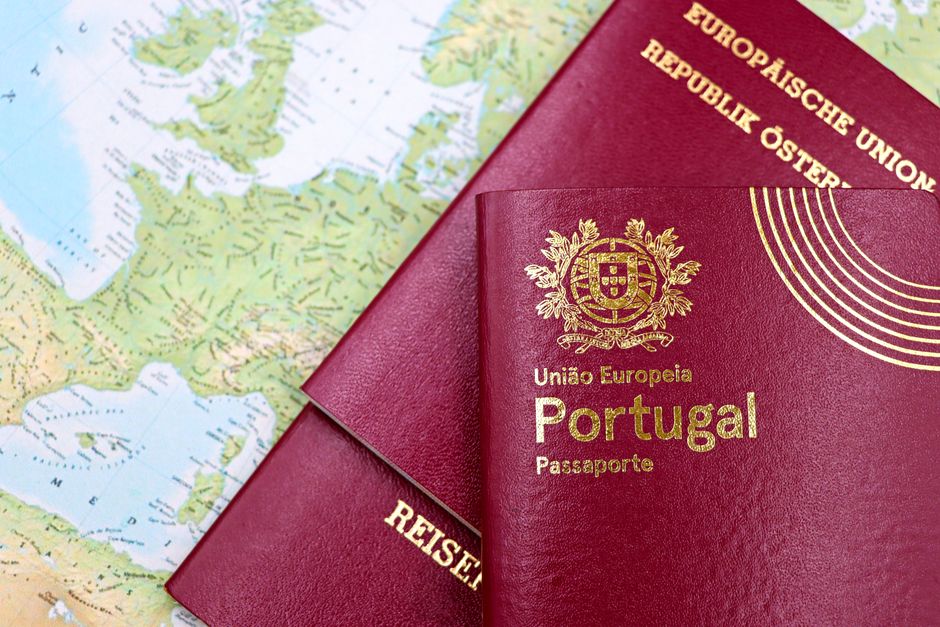
Applying for a Schengen visa from the US changed in 2026. Not in the core rules—those remain tied to the 27-country zone—but in how embassies and visa centers handle appointments, biometrics, and document checks. If you hold a US passport, you do not need this guide. If you hold a green card, a work visa, or any non-US passport, you probably do.
This article covers the exact steps, the fees, the forms, and the rejection triggers. No fluff. No generic advice.
Who Actually Needs a Schengen Visa From the US
Your citizenship determines the application path. Not your US residency status. A green card does not waive the visa requirement. Neither does a US work visa. The rule is simple: if your passport is from a country that requires a Schengen visa, you must apply—even if you have lived in the US for 20 years.
Common scenarios in 2026:
- US citizens: No visa. You can stay up to 90 days in any 180-day period. ETIAS is not yet in force as of early 2026, so no pre-authorization is required yet.
- Green card holders with non-US passports: Visa required if your passport country is on the Schengen visa-required list. Examples: India, China, Philippines, Mexico, Turkey, Nigeria, Pakistan, Russia.
- US visa holders (H-1B, F-1, L-1, etc.) with non-US passports: Same rule. Your US visa does not transfer to Schengen. You apply as a citizen of your passport country.
- Passport holders from visa-exempt countries living in the US: No visa. Examples: UK, Canada, Australia, Japan, South Korea, Brazil (as of 2026 still exempt).
If you are not sure, check the official EU list of visa-required countries. Do not rely on Reddit threads or travel agents. The list changes. In 2026, Kosovo and Georgia gained visa-free access. Kuwait did not.
The 8-Step Application Sequence
Most rejections happen because applicants skip a step or do steps out of order. Here is the correct sequence for a US-based applicant in 2026.
- Identify your main destination country. This is the country where you will spend the most nights. If nights are equal, it is the first country you enter. You must apply at that country’s consulate or visa center in the US. You cannot apply at the French consulate because it has appointments available if you are actually spending 10 days in Germany.
- Determine your visa center. Most Schengen countries outsource visa collection to VFS Global, TLScontact, or BLS International. A few—like Italy in some cities—still run their own consular sections. The center depends on both your destination country and your US jurisdiction. Example: France uses VFS Global in New York, Washington DC, Chicago, Houston, Los Angeles, Miami, and San Francisco. Spain uses BLS International in most jurisdictions.
- Fill out the application form online. Each country has its own form. Most are digital now. You will need your passport details, US address, US visa or green card number, employer information, and travel itinerary.
- Book an appointment. This is the bottleneck. In 2026, appointment wait times for popular destinations like France, Italy, and Spain run 3 to 8 weeks in summer. Apply early. Some centers release slots in batches on Monday mornings.
- Pay the fee. The standard Schengen visa fee in 2026 is €90 for adults. Children 6–12 pay €45. Children under 6 pay nothing. Some countries charge service fees on top of that—VFS Global typically adds $35–$50.
- Attend biometrics appointment. You will submit fingerprints and a photo. Biometrics are valid for 59 months. If you gave fingerprints for a Schengen visa in 2026 or later, you may not need to appear in person again. But most centers still require an in-person document drop-off.
- Wait for processing. Standard processing time is 15 calendar days. In practice, US applications often take 10–21 days. Peak summer months can stretch to 30–45 days.
- Collect or receive your passport. You can pick it up or pay for courier return. Check the visa sticker immediately for errors in dates, passport number, and entry count.
Document Checklist That Actually Matters
Visa centers reject files for missing documents more than any other reason. Here is the 2026 checklist for US residents.
| Document | Specific Requirement | Common Mistake |
|---|---|---|
| Passport | Valid for at least 3 months after planned departure from Schengen. At least 2 blank pages. Issued within last 10 years. | Passport expires in 2 months. Application rejected at the counter. |
| US residence permit | Green card, US visa, I-797, or advance parole. Must be valid for at least 3 months after return to the US. | Expired US visa with a pending extension. No proof of pending status. |
| Application form | Signed and dated. Online submission confirmation printed. | Unsigned form. Or filled in pencil. |
| Photos | 2 photos. 35x45mm. White background. Taken within 6 months. US passport photos are 2×2 inches—different size. Do not use them. | Using US passport photos. Instant rejection. |
| Travel itinerary | Round-trip flight reservation. Not necessarily paid ticket. But must show entry and exit dates. | One-way ticket. Or no ticket at all. |
| Accommodation proof | Hotel bookings for every night. Or invitation letter from host with their ID and address. | Booking for first 3 nights only. Consulate assumes you will overstay. |
| Travel insurance | Coverage of at least €30,000 for medical emergencies, hospitalization, and repatriation. Valid in all 27 Schengen countries for the entire stay. | US health insurance only. Not accepted. Coverage of $25,000. Below threshold. |
| Financial proof | 3 months of bank statements. Pay stubs. Employment letter. Minimum daily amount varies by country: France ~€65/day, Italy ~€50/day, Spain ~€100/day. | Bank statement from 4 months ago. Or a single statement with a large recent deposit that looks like borrowed money. |
| Employment letter | On company letterhead. States position, salary, and approved leave dates. | Generic letter without dates. Or no letter for self-employed applicants. |
| Cover letter | Optional but recommended. Explains purpose of trip, itinerary summary, and ties to the US. | Not included. Consular officers like context. |
For self-employed applicants: include business registration, tax returns, and a letter explaining your business. For students: include enrollment verification and a letter from your school confirming you will return for the next semester.
What Gets Applications Rejected

Rejection letters cite a reason code under Article 32 of the Schengen Visa Code. But the real reasons are more specific. Here are the top five from US-based applications in 2026–2026.
1. Applying at the wrong consulate. You booked a trip to Italy but applied at the French consulate because it had appointments. The French consulate will reject you. Your main destination controls the jurisdiction. No way around it.
2. Insufficient financial proof. A bank statement showing $800 for a 20-day trip to Switzerland. The consular officer does the math. Switzerland expects roughly CHF 100 per day. $800 is not enough.
3. Weak ties to the US. You are on an F-1 student visa, graduating in 2 months, with no job offer. The officer assumes you will stay in Europe. Strong ties mean: an ongoing job, a lease, a family, a degree program with at least one year remaining.
4. Travel insurance that does not meet the standard. The policy says $25,000 coverage. The requirement is €30,000. Or the policy excludes repatriation. Or it is only valid in France, not the whole Schengen area. Read the policy wording.
5. Inconsistent itinerary. Your flight reservation says 10 days. Your hotel bookings cover 7 nights. Your cover letter says 12 days. The officer cannot verify your story. Rejection.
If you get rejected, you can appeal. But appeals take 2–6 months. It is faster to fix the problem and reapply. Most US-based applicants reapply successfully within 4–6 weeks.
Appointment Strategy for 2026
Appointment availability is the real bottleneck. Not processing time. In summer 2026, some VFS Global centers for France and Italy have zero slots for 6 weeks. Here is what works.
Book your appointment before you finalize your flights. Use refundable hotel bookings. Most visa centers allow you to reschedule once for free. If you miss your window, you lose your fee and start over.
Check multiple jurisdictions. You do not have to apply in the city where you live. You can apply at any visa center that serves your destination country and has jurisdiction over your state. Example: a Texas resident can apply in Houston or Dallas for some countries, but not in New York. Jurisdiction rules are state-based, not city-based. Check the specific consulate’s website.
Some countries are faster than others. Lithuania, Latvia, Estonia, and Slovenia consistently have shorter wait times than France, Italy, and Spain. If your itinerary is flexible, consider entering through a less popular Schengen country. You still must spend most of your time there. But a 5-day stop in Lithuania before 10 days in France is valid if Lithuania is your first entry and you spend equal or more nights there.
Travel Insurance: The Policy That Meets the Standard

US health insurance does not work. Not Cigna. Not Blue Cross. Not Aetna. The Schengen requirement is specific: a policy that covers emergency medical treatment, hospitalization, and medical repatriation up to at least €30,000, valid in all Schengen countries for the entire duration of your stay.
Three insurers commonly used by US-based applicants in 2026:
- AXA Schengen Europe Travel Insurance: The most widely accepted. Low-cost plan starts around $25 for a week. Coverage meets the €30,000 threshold. Digital certificate issued immediately.
- Allianz OneTrip Emergency Medical: Stronger coverage for US residents. Typically $40–$70 for a 10-day trip. Includes higher medical limits and trip interruption. Must select the Schengen-compliant option.
- IMG Patriot Travel Medical: Good for longer trips or older travelers. Covers pre-existing conditions with certain plans. More expensive but more comprehensive.
Buy the policy after your itinerary is set. The dates on the insurance certificate must match your flight dates exactly. If your flight arrives at 11:55 PM on June 1, your insurance must start June 1. Not June 2. Officers check this.
Do not buy from unknown websites. Visa centers do not accept random digital policies without a verifiable provider name and policy number. Stick with recognizable insurers.
After You Get the Visa: Read the Sticker
This is the step everyone skips. You get your passport back, you are excited, you book your trip. Then you land in Paris and the border officer says your visa expired yesterday.
The visa sticker contains four critical pieces of information:
- Validity dates: Your entry window. You cannot enter before the start date or after the end date.
- Duration of stay: The number of days you are allowed. Usually 90, but sometimes shorter. If it says 15, you get 15 days. Not 90.
- Number of entries: “1” means single entry. You leave Schengen, you cannot re-enter. “MULT” means multiple entries. You can exit and re-enter within the validity period.
- Territorial validity: Usually says “Schengen States.” If it lists specific countries, you can only travel in those countries.
Check the sticker before you leave the visa center. If there is an error, report it immediately. Corrections are free if caught within 48 hours. After that, you reapply and pay again.
Carry a copy of your insurance certificate and hotel bookings with you at border control. Officers rarely ask. But when they do, you want the paper in your hand, not buried in your email.
One more thing: the 90/180 rule applies to your stay, not the visa validity. You can hold a valid visa and still be denied entry if you have already spent 90 days in Schengen within the last 180 days. Track your days. The EU has an online calculator for this.