
A persistent belief in the travel community suggests that airline websites track your browsing history via cookies to artificially inflate prices when they detect repeated interest in a specific route. This theory encourages travelers to spend hours toggling incognito mode or clearing cache files in hopes of revealing a lower fare. However, empirical data from pricing experts and computer scientists suggests that this is largely a misunderstanding of how complex dynamic pricing algorithms operate. Airfares fluctuate based on global demand, inventory buckets, and sophisticated revenue management systems rather than individual browser sessions. Understanding the technical reality of how seats are priced is the first step toward consistently securing cheap flights without relying on digital superstitions.
Examining the Myth of Browser Cookies and Incognito Flight Searches
The concept that clearing your browser cookies leads to cheaper flights is one of the most enduring myths in the travel industry. While it feels intuitive—especially when a price jumps $50 after a refresh—the reality is far more clinical. Airlines utilize Global Distribution Systems (GDS) and Revenue Management Systems (RMS) that adjust prices in real-time based on thousands of variables. These variables include historical booking velocity, competitor pricing, fuel costs, and the number of seats remaining in specific fare classes (often referred to as ‘buckets’).
When you see a price increase after searching, it is rarely because the airline “saw you coming.” Instead, it is typically because a lower-priced fare bucket sold out elsewhere in the world at that exact moment, or the caching on the search engine was updated to reflect the most current GDS data. Airlines are highly regulated entities; deceptive pricing practices based on individual user tracking would invite significant legal scrutiny and technical overhead that provides little ROI compared to broad market adjustments.
How Dynamic Pricing Algorithms Actually Function
Dynamic pricing is the backbone of the aviation industry. Every aircraft is divided into numerous fare classes, even within the same physical cabin. For example, an economy cabin might have fifteen different fare buckets, ranging from ‘Basic Economy’ with heavy restrictions to ‘Full Fare Economy’ which is refundable. Only a set number of seats are allocated to the lowest price points. As those seats are purchased by travelers across the globe, the system automatically moves to the next, more expensive bucket. This is why prices appear to climb as the departure date approaches; the cheaper inventory is simply exhausted.
Factors That Truly Influence Real-Time Price Fluctuations
Several legitimate factors cause the sudden price shifts that travelers often misattribute to cookies. One primary driver is the ‘hold’ system. When a traveler initiates a booking on a site like Expedia or a direct airline portal, the system may temporarily hold that fare bucket for 10 to 20 minutes while the user enters credit card details. During this window, that specific cheap seat is removed from the available inventory. If you search during that time, you see the next higher price. If that user abandons the purchase, the seat returns to the inventory, and the price drops back down. This creates the illusion of price manipulation when it is actually just a reflection of temporary inventory holds.
Airlines prioritize yield management above all else. Their goal is to fill every seat at the highest possible price the market will bear at any given second, which requires a macro-view of demand rather than micro-tracking of individual IP addresses.
Comparing the Efficiency of Major Flight Search Engines and Aggregators

Not all search tools are created equal. To find truly cheap flights, one must understand the difference between an Online Travel Agency (OTA) and a meta-search engine. An OTA, such as Expedia or Priceline, actually sells you the ticket and handles the transaction. A meta-search engine, like Google Flights or Skyscanner, aggregates data from hundreds of OTAs and airline websites to show you where the lowest price exists. Relying on a single platform is a tactical error, as different aggregators have different relationships with regional carriers and low-cost airlines.
| Tool Name | Primary Strength | Approximate Cost | Pros | Cons |
|---|---|---|---|---|
| Google Flights | Speed and Map Integration | Free | Unmatched speed; excellent ‘Explore’ feature for flexible destinations. | Does not index some smaller OTAs that might have lower niche fares. |
| Skyscanner | Global Low-Cost Carrier Coverage | Free | Finds obscure budget airlines in Asia and Europe; great for multi-city. | Results can sometimes include unreliable third-party vendors. |
| ITA Matrix | Granular Filtering and Routing | Free | The professional’s tool; allows for specific fare code searches. | Cannot book directly; steep learning curve for casual users. |
| Hopper | Price Prediction and Alerts | Free / Paid Tiers | Excellent mobile interface; 95% accuracy in price forecasting. | Heavy push toward their own ‘protection’ products and upsells. |
Google Flights vs. Skyscanner: A Technical Analysis
Google Flights is widely considered the gold standard for initial research due to its direct integration with the ITA Software backend (which Google owns). It allows users to track price trends over time and view a calendar of the cheapest days to fly. However, its primary weakness is that it tends to favor direct airline bookings and major OTAs. Skyscanner, conversely, excels at scraping data from smaller, regional travel agencies. While these agencies might offer a ticket for $20 less than the airline, users should exercise caution; the customer service at a small OTA in a different time zone can be non-existent if a flight is canceled. The expert approach is to use Google Flights to identify the baseline price and then cross-reference with Skyscanner to see if a deeper discount exists via a third party.
Using ITA Matrix for Advanced Fare Construction
For those seeking the absolute lowest fare on complex itineraries, the ITA Matrix remains an essential resource. It allows users to input advanced routing codes, such as specifying a layover in a particular city or excluding certain aircraft types. While you cannot purchase a ticket on the Matrix, you can take the exact fare construction and ‘routing language’ to a specialized travel agent or use a tool like BookWithMatrix to finalize the purchase. This is particularly useful for finding ‘fuel dumping’ opportunities or complex multi-city trips that standard search engines struggle to price correctly.
The Financial Advantages of Alternative Routing and Multi-City Itineraries
The most direct route is almost always the most expensive. Airlines charge a premium for the convenience of non-stop travel. To secure cheap flights, one must often embrace the ‘hub-and-spoke’ model or look for logistical inefficiencies in airline pricing. This involves looking at airports that serve as major international gateways and then booking separate ‘positioning’ flights to reach your final destination. For instance, flying from a small regional airport in the Midwest directly to Paris might cost $1,200. However, flying to New York (JFK) for $150 and then taking a separate low-cost carrier to Paris for $400 can save over $600.
This strategy requires a higher level of risk management. Because these are ‘self-interlined’ flights—meaning they are on separate tickets—the second airline is under no obligation to help you if your first flight is delayed. It is standard practice among experienced travelers to allow at least a four-hour window, or even an overnight stay, between separate tickets to mitigate this risk. The savings often more than cover the cost of a mid-range airport hotel.
The Risks and Rewards of Hidden-City Ticketing
Hidden-city ticketing is a controversial but effective method for finding cheap flights. This occurs when a traveler books a flight with a layover in their actual intended destination and simply exits the airport during the connection. For example, a direct flight from New York to Charlotte might cost $300. A flight from New York to Orlando with a layover in Charlotte might only cost $150. By booking the Orlando flight and getting off in Charlotte, the traveler saves 50%. Platforms like Skiplagged have popularized this method.
However, there are significant caveats. You cannot check luggage, as it will be sent to the final ticketed destination. Furthermore, airlines strictly forbid this in their Contract of Carriage. Frequent use can result in the loss of frequent flyer miles or even being banned from the airline. It is a tool for the occasional traveler looking for a specific deal, rather than a sustainable long-term strategy for business travelers or those with loyalty status.
Repositioning Flights and the Fifth Freedom Route Advantage
Another overlooked strategy is the ‘Fifth Freedom’ flight. These occur when an airline flies between two foreign countries as part of a longer route originating in its home country. An example is Emirates flying between Newark (EWR) and Athens (ATH). Because the airline needs to fill seats on this specific leg of a longer journey, they often price these routes very competitively compared to domestic carriers. These flights frequently offer a superior service level at a fraction of the cost of a traditional transatlantic fare. Identifying these routes requires specialized knowledge, but they represent some of the best values in the aviation market.
Analyzing Optimal Booking Windows Based on Historical Fare Data

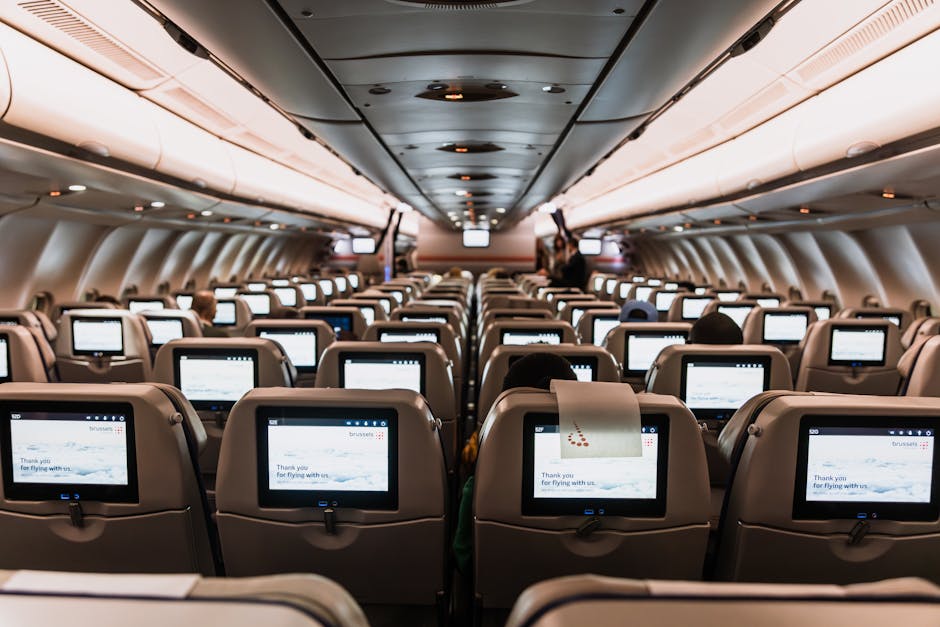
Timing the purchase of a ticket is a mathematical challenge. While the ‘Tuesday at 3 PM’ rule is a relic of the past when airlines manually updated their databases once a week, there are still statistically significant windows where prices tend to bottom out. These windows differ drastically between domestic and international travel. The goal is to book when the airline has moved past the ‘early bird’ pricing but before the ‘last-minute’ business travel surge begins.
Data from 2023 and early 2024 suggests that for domestic flights, the ‘Goldilocks’ zone is typically 28 to 60 days before departure. During this period, airlines have a clear picture of how the flight is filling up and will adjust prices to stimulate demand if the plane is too empty. If you book six months in advance, you are often paying a ‘certainty premium.’ If you book two weeks in advance, you are competing with corporate travelers whose companies are willing to pay any price for a specific time slot.
Domestic Booking Timelines: The 1-to-3 Month Rule
For flights within the same continent, the most aggressive price drops usually occur about six weeks out. It is also beneficial to look at the day of the week for the actual flight, rather than the day of the booking. Flying on a Tuesday, Wednesday, or Saturday often results in a 15-25% reduction in fare compared to Friday or Sunday. This is because leisure travelers prefer weekends, and business travelers prefer Monday mornings and Friday afternoons. By shifting your itinerary by just 24 hours, you can often save hundreds of dollars without changing your destination.
International Long-Haul Strategy: Identifying the Sweet Spot
International travel requires a much longer lead time. The most favorable prices for transoceanic flights are generally found 3 to 6 months in advance. Unlike domestic routes, international flights rarely see significant price drops as the date nears because the operational costs of a 10-hour flight are so high that airlines would rather fly with a few empty seats than significantly devalue their brand by offering $200 last-minute fares to London or Tokyo.
- Off-Peak Seasons: Booking for travel in October-November or February-March (excluding holidays) consistently yields the lowest international fares.
- Holiday Lead Times: For peak travel like Christmas or Summer, the booking window shifts to 6-10 months in advance.
- Mid-Week Departures: International flights departing on a Wednesday are statistically the cheapest across almost all major carriers.
Ultimately, finding cheap flights is less about tricks and more about flexibility and the use of correct data tools. By ignoring the myths of incognito browsing and focusing on fare bucket logic, strategic routing, and statistical booking windows, travelers can systematically reduce their annual spend on airfare. The market is volatile, but it follows predictable economic patterns that reward the patient and the informed.